Repiping & Whole-Home Pipe Replacement
Swap aging supply piping throughout the house when patches keep failing.
Neither pipe wins every contest. PEX is cheaper and flexible. Copper is proven and repairable. Your house, your water and your budget decide which fits.
By the Tempe Express Plumbing team ·
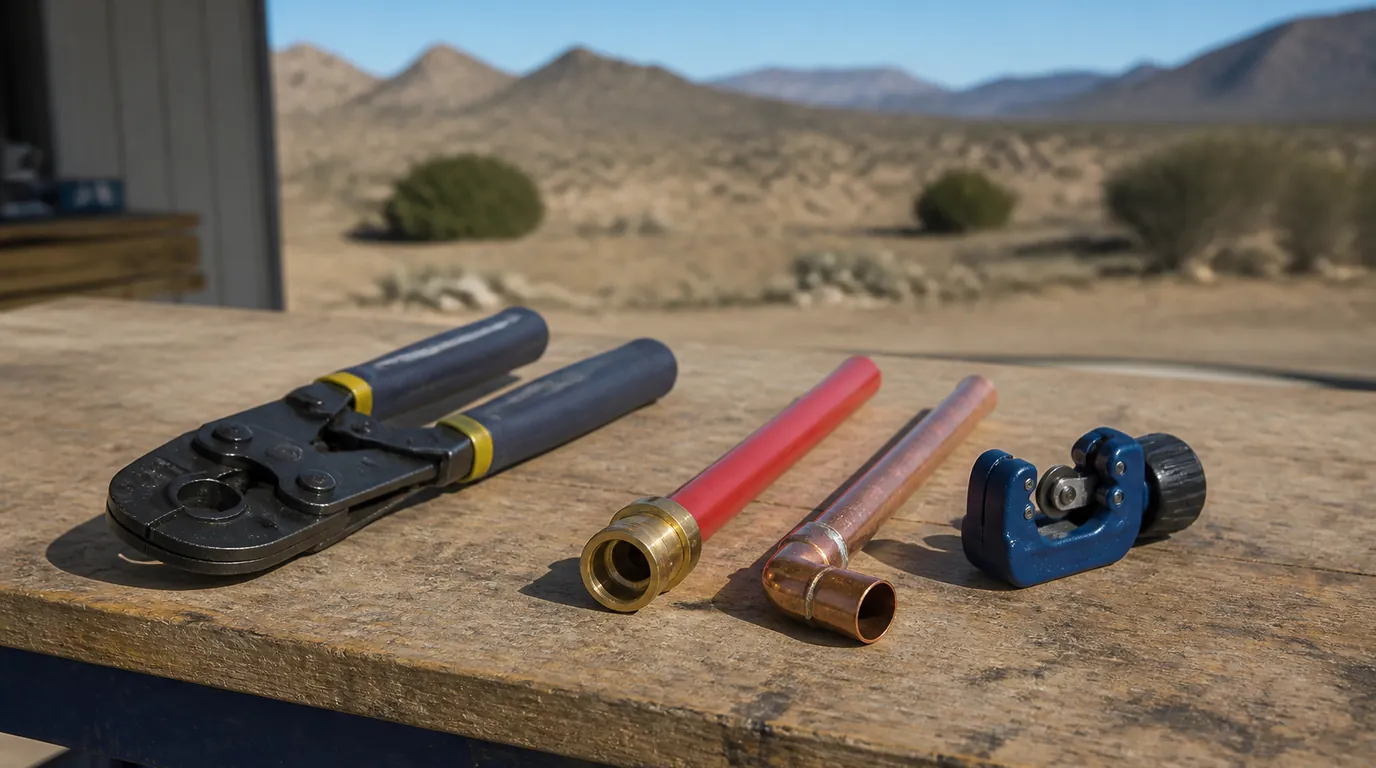
PEX is bendable plastic tubing joined with crimp or expansion fittings, while copper is rigid metal pipe joined by solder or push fittings. When installed to code, both carry drinking water safely.
The choice usually comes down to cost, access and how the water in your area treats metal.
PEX usually costs less in materials and labor. It curves around corners with fewer fittings, and long runs can be fed through walls with smaller openings.
Copper costs more and takes more time. In a repipe, that difference can be significant. Ask the contractor to price both side by side.
Copper can last for decades, but it can also pit and thin in certain water. PEX does not corrode, though sunlight and some chemicals can damage it, so it should not sit exposed outdoors.
Ask the contractor what lifespan they expect for each in your house, and what warranty applies to the pipe and the labor.
Tempe draws on Salt River and Verde River water, and the city notes that these rivers differ in dissolved solids, chlorides and hardness. Minerals and chlorides can affect metal pipe differently from plastic.
The annual water quality report lists the figures. A contractor can use them to explain which material fits your supply.
This comparison is qualitative. Ask a contractor for actual prices.
| Feature | PEX | Copper |
|---|---|---|
| Material price | Generally lower | Generally higher |
| Install effort | Bends, fewer fittings | More joints, more time |
| Sun exposure | Needs shielding | Unaffected |
| Corrosion | Does not rust or pit | May pit in aggressive water |
| Sound | Tends to be quieter | Can ring or tick |
Copper pinholes can be patched with a fitting, and a repair is straightforward. PEX repairs use a coupling and a crimp tool. Both are fixable, though PEX is quicker in tight spaces.
If leaks keep showing up, burst pipe repair fixes the break, and a repipe addresses the cause.
Attic temperatures in the Valley climb very high in summer. Copper tolerates heat well. PEX also handles hot water, but exposure to sunlight must be avoided, so it runs in insulated, shaded spaces.
Plan routes through shaded walls and attics, and ask how pipe is protected.
PEX is quieter and resists water hammer better because it flexes slightly. Copper can ring when a valve closes. Both flow well when sized correctly.
Fewer fittings in PEX reduce pressure loss on long runs.
For a whole-house replacement on a budget, PEX is the usual pick. For exposed runs or where a metal pipe is preferred, copper suits. Some homes use both.
See repiping and whole-home pipe replacement for what the project involves.
Joints are where most plumbing problems start, so the joining method matters as much as the pipe. Copper is usually soldered, which needs a torch and a skilled hand, or joined with push-to-connect fittings that cost more. PEX uses crimp rings, clamp rings or expansion fittings, and each system needs its own tool.
A poorly made joint in either material can seep for years before it shows. Ask the contractor which joining method they use and who stands behind the connections. A written scope that names the pipe, the fittings and the permit gives you something to compare between quotes.
Some insurers ask what pipe material a house has, and the answer can influence coverage. Older galvanized or polybutylene pipe can raise questions, while PEX and copper are both widely accepted. If you plan to sell, a repipe with either material is a point you can document for a buyer.
Neither material is a lifetime guarantee. Both can fail from poor installation, extreme water chemistry or physical damage. Keep records of the work, the permit and the manufacturer's information so you can show what was installed.
A single leak in a copper line does not always call for new pipe. A short section can be cut out and replaced, and transition fittings let PEX join copper where the two meet. When leaks repeat in several places, the pipe is wearing out and a larger project may cost less than repeated repairs.
The repiping page describes what a whole-house project involves, including access, patching and the days without water. Ask for the plan in writing before you agree.
Ask which pipe the contractor prefers and why. A good answer refers to your house, the access, the water, and the budget. Ask how many joints the job will have, who pulls the permit and whether the quote includes patching drywall.
Ask about the manufacturer's information for the pipe and the fittings. Some PEX products carry long warranties that apply only when specific fittings and tools are used. Keep the paperwork where you can find it.
If the answer is always the same pipe in every house, that is a sign the contractor may not have weighed your situation. A reasonable contractor will explain when the other material would be better.
If access is easy and the budget is tight, PEX often wins on cost and speed. If you want exposed pipe that can sit in sunlight, or you are matching existing copper in a small repair, copper makes sense. Many homes use both, and neither choice is wrong when it is installed properly.
The pipe itself is only part of a repipe. Drywall repair, painting, flooring, permits and the time the water is off all add to the total. A quote that lists only the pipe and labor may leave out the finishing work, so ask what is included and who handles patching.
Ask about the schedule as well. A plan that shuts off the water for a full day is very different from one that keeps a fixture or two running. Put the answers in writing before work begins.
Yes, when installed to code. Confirm the tubing is rated for potable water.
It can, but local water affects both. Ask the contractor about expected life in your area.
Not in direct sun. It needs cover or shade.
Yes, with the correct transition fittings, and many repairs do exactly that.
Swap aging supply piping throughout the house when patches keep failing.
Shut off the flow, then swap out the cracked or split section of pipe.
Pinpoint hidden water loss behind drywall, under flooring or along the pipe buried in the yard.
One weak faucet and a weak house have different explanations. Check them in this order before booking a visit.
A thud when a faucet or appliance valve shuts is water hammer. Learn the causes and inexpensive remedies.
Locate and test your shutoff before an emergency. This guide covers finding it, closing it and what to do afterward.
Figures and statements on this page that come from outside references are listed here.
Call the 24/7 line and ask about pipe options. A dispatcher lines up a local contractor.
Service area centered on Tempe and nearby Maricopa County cities.