Leak Detection
Pinpoint hidden water loss behind drywall, under flooring or along the pipe buried in the yard.
One repair after another can add up to a repipe. If pipes keep leaking, water looks rusty or pressure fades throughout the house, replacing the system may cost less than chasing leaks.
Tell the dispatcher about past leaks and the age of the home, and a contractor is lined up.
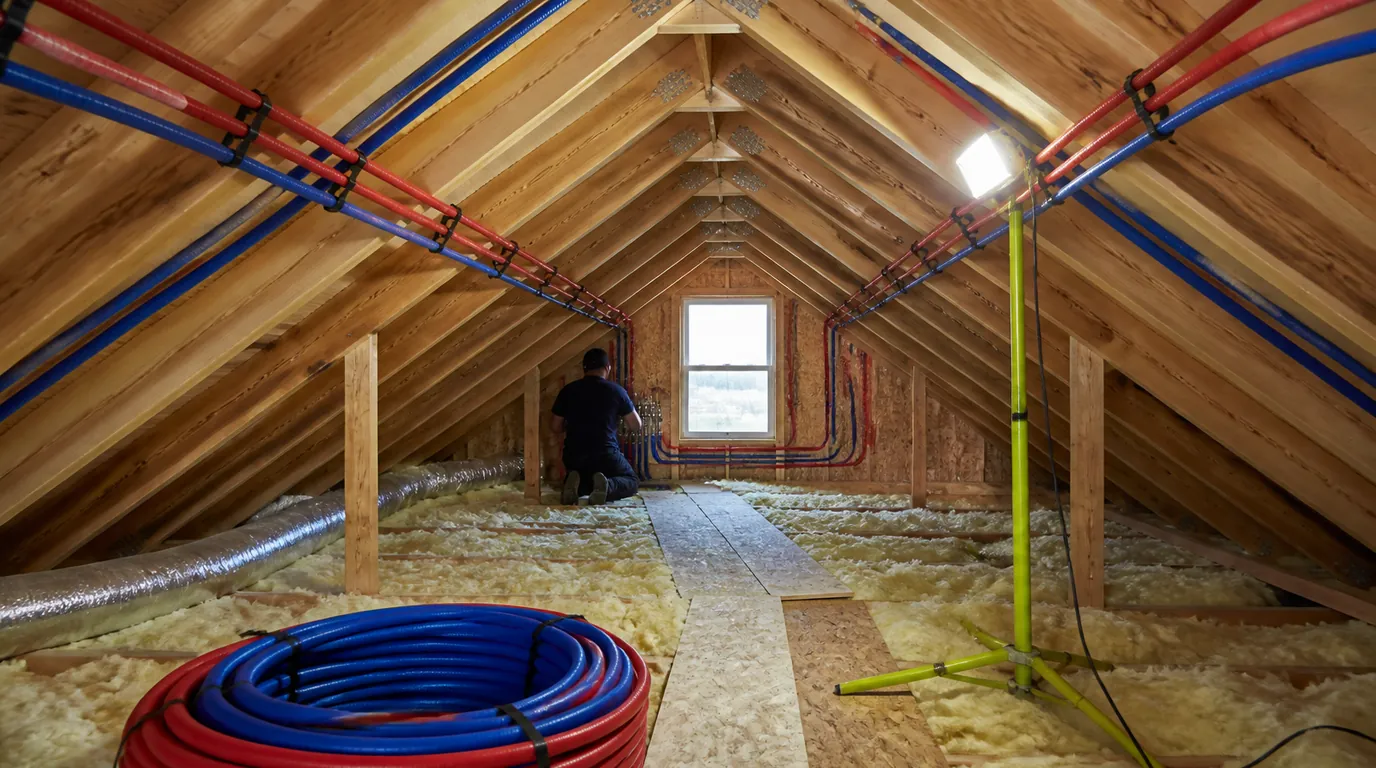
A repair fixes a failed spot. A repipe replaces the supply system that carries water to fixtures. When failures keep happening in different places, the pipe itself is the problem.
Ask the contractor to show which sections are failing and why. A fair recommendation points to specific evidence, not a general warning.
Common replacements include PEX, copper and CPVC. PEX is flexible and needs fewer fittings. Copper is durable and can be repaired, but it costs more. Each choice has code, cost and water-chemistry trade-offs.
Local water chemistry matters. Tempe publishes its water quality report, and a contractor can use it to explain which pipe suits your supply.
Repiping is priced by house size, pipe material and access.
Pricing depends on access and pipe type. Request the quote itemized so you can compare contractors.
About 58 percent of Tempe homes date from 1970 to 1999. Pipe from that era is often past the point where failures become frequent, depending on material and water.
Condos and townhomes add another layer. Pipe may run through shared walls, so the association's rules and neighbors' schedules can shape the job.
Repiping usually means openings in drywall at many points. Some contractors route new lines through the attic to avoid cutting a slab. Expect temporary water shutoffs and a few days of work in a typical house.
Ask who patches and paints the openings. Often the plumber leaves drywall rough, and that finishing work is separate.
One leak does not mean repipe. A pattern does.
A pinhole in copper can be cut out and patched. When several pinholes show up, the pipe wall is thinning everywhere. Replacing a long run makes more sense than patching a thin one.
Ask the contractor to cut open a failed section and show you. The inside of the pipe tells the story better than any estimate.
Galvanized pipe fills with rust and loses flow. CPVC can crack as it ages. Some older homes also contain other plastic pipe that the contractor can identify on sight.
If you do not know your pipe, send photos to the dispatcher or ask the contractor to identify it on the first visit.
Some owners start with the main line and add branches later. Others replace everything in one go to avoid repeated disruption. Ask for each option priced separately, plus a plan for phased work if cost is a concern.
In slab-on-grade homes, new supply lines are often run through the attic instead of cutting the slab. The old lines are abandoned or capped. Ask whether attic routing fits your layout and whether insulation or drywall repair is included.
A whole-house repipe usually means the supply side. If drains are failing as well, tell the dispatcher. Cast iron and older plastic drains have their own repair paths.
Pinpoint hidden water loss behind drywall, under flooring or along the pipe buried in the yard.
Shut off the flow, then swap out the cracked or split section of pipe.
Find a pressurized pipe leaking under the foundation and weigh the ways to reach it.
Leaks that keep returning, discolored water and low pressure at every fixture are the main signs. A plumber should inspect the pipe and show you the evidence.
It depends on your water, budget and layout. PEX, copper and CPVC each work. Ask the contractor to explain the choice for your house.
Often not, since shutoffs are scheduled. Ask how many hours per day the water will be off.
Generally yes, and the contractor usually applies for it. Ask who files the permit and whether an inspection is included.
Yes, the line never closes. A pipe that is spraying or flooding is urgent, while planning a full repipe is daytime work.
Pricing depends on house size, fixture count, pipe type and access. The dispatcher gives a clear quote before work begins.
Often yes. It avoids cutting concrete but opens ceilings or walls in places. A contractor checks your layout.
It depends on how much pipe is thin. Ask the contractor to show the inside of a failed section.
Repipes use staged shutoffs so the water comes back at day's end. Ask for the plan on the call.
Figures and statements on this page that come from outside references are listed here.
Phone the dispatcher and ask about repipe options for your house, and a local contractor will be connected.
Service area centered on Tempe and nearby Maricopa County cities.