Leak Detection
Pinpoint hidden water loss behind drywall, under flooring or along the pipe buried in the yard.
Water under a concrete floor is hard to see and easy to ignore. A warm patch, a puddle at a wall base or a meter that never rests can all point to a pipe beneath the slab. Water rising through the floor, or a hot patch underfoot, justifies a call at any hour.
Say what the floor feels like and what the meter dial shows, and a contractor is arranged.
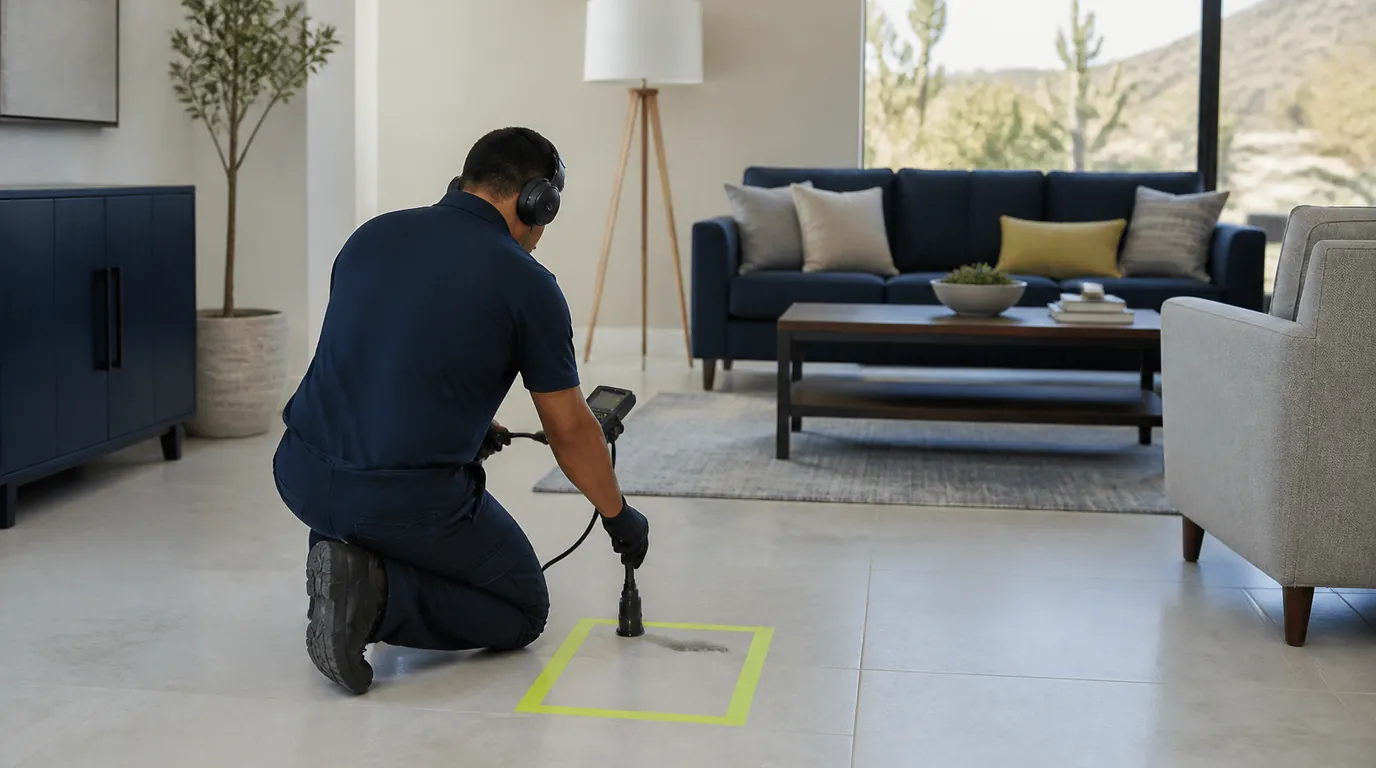
In a slab-on-grade house, some supply pipes run beneath the concrete floor. A leak there is a slab leak. The water may rise through cracks, soak flooring or drain into the soil with no sign above ground.
Not every wet floor is a slab leak. A failed appliance hose, a sweating pipe or a drain fitting can look the same, so the first step is to confirm which system is losing water.
The plumber shuts off the house, watches the meter and pressure tests the lines to learn which one is leaking. Listening equipment then traces the sound of escaping water to a spot on the floor.
Ask whether the contractor marks the spot and how close the mark is expected to be. A tight location keeps the concrete cut small.
Detection and repair are quoted differently. These factors drive the number.
Ask for the repair choices in writing, with flooring and patching listed separately from the plumbing work.
If your Tempe house or condo sits on a slab, much of its plumbing is out of sight. A leak can run a long time before it shows. Check the meter with the house shut off, since it is the most reliable early warning.
Many Tempe units are rentals. Report a suspected slab leak to the owner in writing, because opening a floor requires their approval.
There are three broad options. Cut the slab and fix the pipe at the leak. Abandon the failed line and run a new one overhead through the attic or walls. Or reroute the whole system if several lines are worn.
A spot repair costs less up front. Rerouting avoids repeated floor cuts when pipe is aging, but it opens walls and ceilings. A good contractor explains both and lets you decide.
Cutting concrete creates dust and noise, and tile or wood above the cut must be lifted. Ask who patches the slab and who replaces the flooring. Those are often separate trades.
If water has already soaked the floor, drying matters. See the page on water damage restoration for that work.
Water under concrete rarely announces itself. These clues come up most often.
Not every home sits on a flat slab. Some have raised floors with a crawl space or a small cavity below, and a broken pipe there can drip for months. Water-stained joists, a damp smell or standing water under the house are the clues.
In either case the plan is the same: confirm the leak with a pressure test, trace it with listening equipment, then choose between a spot repair and a reroute. For a leak near a water heater, the connection between the heater and the house is one of the first lines checked.
Cutting concrete is sometimes the best route. The contractor marks the spot, saws a small opening, repairs the pipe and patches the slab. The same logic applies to a driveway or patio when the leaking line runs beneath it.
Ask who patches the concrete and whether the finish matches the surrounding surface. For tile or wood above the cut, lifting and replacing flooring is often a separate trade.
Close the main valve if water is rising through the floor. Move rugs and furniture away from wet areas. Photograph the damp spots, write down meter readings, and note when you first noticed the problem.
If hot water is reaching the leak, turn off the water heater to prevent scalding and stop it from refilling. Keep children and pets off a floor that feels hot.
A single failure in sound pipe is a candidate for a spot repair. A second leak in the same pipe is a signal to consider a reroute or a repipe, since concrete cuts add up. Ask for the three options priced separately, and ask how each affects walls, ceilings and flooring.
A contractor should also tell you whether you need an engineer or a permit for slab work. Ask about it early so the schedule does not slip.
Pinpoint hidden water loss behind drywall, under flooring or along the pipe buried in the yard.
Swap aging supply piping throughout the house when patches keep failing.
Restoration after a leak, burst supply line or storm intrusion: drying first, rebuilding second.
Look for a warm floor, a meter that moves with everything off, damp flooring or the sound of running water. A plumber confirms it with a pressure test.
Sometimes the failed line can be rerouted overhead instead. That avoids cutting the slab but opens walls or ceilings, so compare both options.
Coverage varies by policy. Some pay for sudden resulting damage but not the failed pipe. Call your insurer before work starts and save photos and the written leak report.
It depends on the method and the access. Ask for a time estimate and what happens if the cut reveals a second problem.
Yes. The line is answered around the clock. Close the main valve, then describe the floor and the meter. Repairs are scheduled by the contractor.
Sometimes. Water bubbling through concrete, a meter that never stops or a scalding patch of floor calls for shutting the valve and phoning now. A slow seep can often wait for the next opening.
Pricing depends on access and pipe type. Detection and repair are quoted separately. The dispatcher gives a clear quote before work begins.
A well-located leak needs only a small cut. Ask whether the spot gets marked on the floor and how wide the opening will be.
The contractor who finds the leak can usually quote the repair. Confirm on the call that the same visit covers both.
Same-day visits are available. Close the main valve, then call and share the details.
Often yes. The line is located, then the concrete is cut in a small section and patched. Ask who matches the surface finish.
Shut the main valve if it is within reach, then phone the dispatch line. The dispatcher will ask about the floor and the meter.
Service area centered on Tempe and nearby Maricopa County cities.