Slab Leak Detection & Repair
Find a pressurized pipe leaking under the foundation and weigh the ways to reach it.
The bill jumped. A wall feels damp. The meter turns while every tap is closed. Leak detection answers one question first: where is the water going? Water spreading right now? Skip the wait for a daytime slot and phone the 24/7 line.
Describe what you are seeing and a local contractor is assigned. Same-day visits are available.
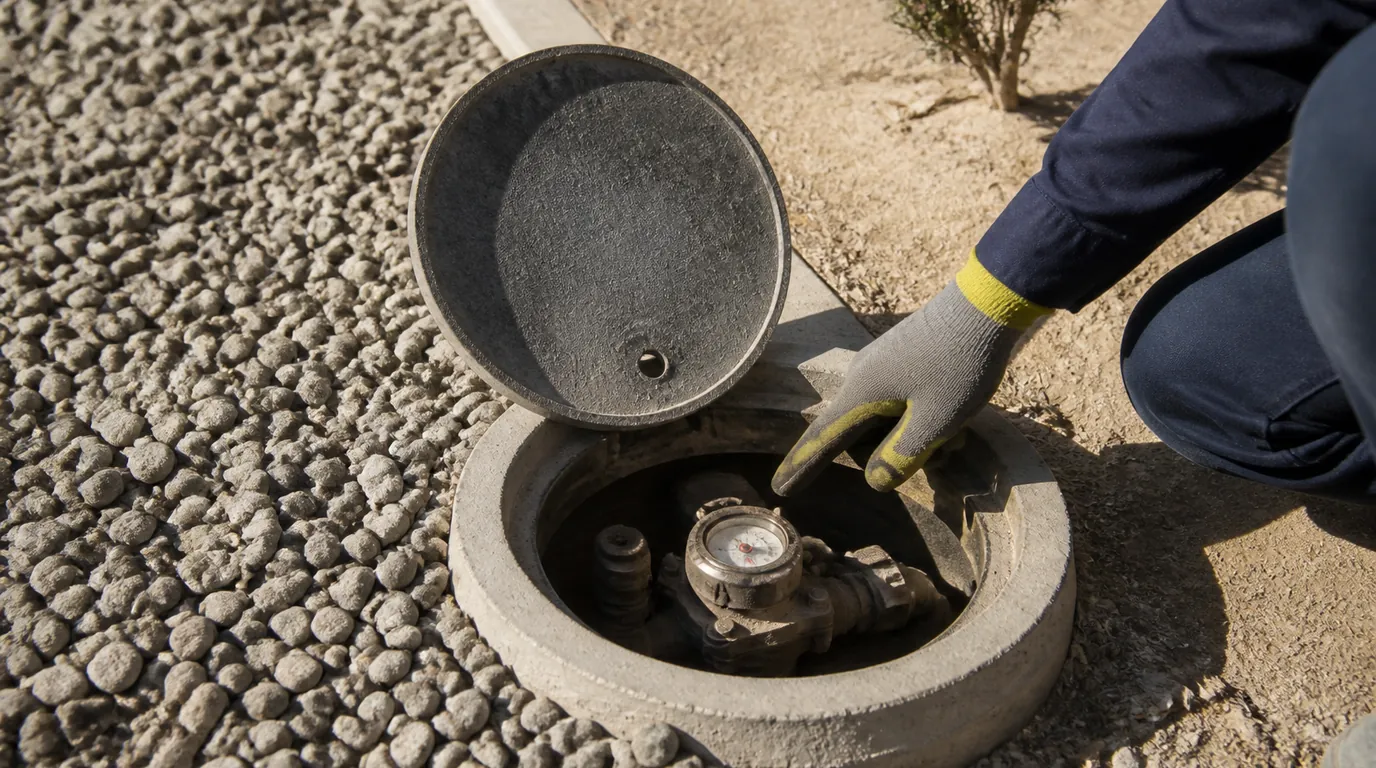
Shut every faucet, then unplug or pause the ice maker, softener and sprinkler controller. Lift the meter lid and find the small flow dial. If the star or triangle turns, something downstream is using water.
Then test the toilets. Drop food coloring into each tank and wait ten minutes. Color in the bowl means a flapper is letting water seep, which is a cheap fix.
If the meter holds still, the leak may only show under pressure or while a fixture runs. That is a different search, and it starts with branch lines and appliance hookups.
Searches go step by step. First the house is cut off from the street, then each branch valve is shut in turn while the gauge is watched, until the loss is traced to one stretch of pipe.
Next the contractor listens along the suspect pipe and may use a thermal camera or a pressure test on that section. Which tools a contractor carries varies, so ask on the call what will be used and why.
Precision keeps demolition small. Once the leak is narrowed to a patch of wall or floor, only that patch needs opening.
Most Tempe homes went up between 1970 and 1999, according to NeighborhoodScout, so their pipes are now decades old. That age is when pinholes and failing fittings start to show.
With roughly six in ten Tempe homes occupied by renters, a dripping line can go unreported for weeks. Tenants should put the report in writing and note the date it was sent.
Locating the leak is billed separately, based on time and tools, and the repair is quoted after that. Four things raise or lower the figure.
If the same company will do the repair, ask whether the locating charge reduces the repair bill. Policies differ, so have the answer written on the quote.
Frequent culprits include pipe inside walls, valves behind a tub, braided hoses on the washer or fridge, and lines beneath the slab. Out in the yard, the pipe from the meter and any sprinkler branch fail most often.
Waste-pipe leaks behave differently because they drip only when something drains. A stain that appears after a shower hints at a drain, whereas one that grows all day hints at a supply line.
Concealed leaks leave faint clues. Any one below justifies a closer look.
Nothing finds every leak. Sound-based listening hears water squeezing out of a pressurized line. Heat imaging reveals cool or warm zones inside walls and floors. A drain camera travels inside waste lines. A pressure hold test shows whether an isolated section loses pressure. Tracer gas helps when plastic pipe leaks too quietly to hear.
Gear varies from one contractor to the next, so no page can promise a specific device. Ask which tool will be used and why. A good answer links the tool to the pipe material and the suspected location.
A precise location keeps the hole small. Before starting, ask whether the spot will be marked and about how large the opening will be.
Line up recent bills against the same months a year earlier, because Valley summers naturally raise use. Then note the meter reading, shut everything off, wait twenty minutes and look again. A changed number confirms flow.
If the meter moves only a little, check toilets first. If it moves steadily, the leak is likely in a supply line, a water heater connection or the buried pipe from the meter. Report your findings to the dispatcher so the visit starts where the clues point.
A stain that spreads on a ceiling often comes from a bathroom above, a shower pan or a supply fitting inside the wall. The stain is rarely directly under the source, because water travels along framing before it drips.
Shut off the main valve if water is actively dripping. Put a bucket under the drip, and cut power to a light fixture if it is wet. Photograph the stain and note when it appeared. Do not poke the bulging drywall unless water is pooling behind it and a bucket is ready.
Seeps, buried plastic pipe and leaks that open only under pressure slip past easily. If a first visit finds nothing, the second should try a different method rather than repeat the first.
Tell the dispatcher what was tried and what the first plumber concluded. Useful next steps include isolating one branch at a time, pressure testing the line from the meter, and checking the water heater and irrigation connections. Irrigation and sprinkler lines are not a service this site lists, but the leak search can show whether water is escaping before the irrigation valve.
Shared walls in duplexes and small apartment buildings make the origin harder to guess. Tell the dispatcher the unit count and which unit is wet.
Selling a house? A leak found during inspection can stall a closing. A diagnostic visit gives a written location and a repair path that you can share with the agent.
Find a pressurized pipe leaking under the foundation and weigh the ways to reach it.
Fix or renew the supply pipe running from the street meter to your home's main shutoff.
Restoration after a leak, burst supply line or storm intrusion: drying first, rebuilding second.
Check the meter with everything turned off, since a moving indicator means water is flowing. A jump in the bill, a musty odor or a warm patch of floor are further clues.
The contractor who finds the leak can usually quote the repair as well. Ask on the call whether the same visit covers both, and what happens to the detection fee.
Only if the search shows it is necessary, and then to the smallest opening that reaches the pipe. Ask the contractor to mark the spot and describe the opening before work starts.
Yes. Tell the dispatcher it is a unit in a larger building. The contractor may need the manager's approval and access to a shared shutoff.
Calls are answered overnight. Say where the water appears and what the meter does, shut the main valve if reachable, and ask the dispatcher about the arrival window.
Price hinges on access, pipe type and how many methods are needed. The dispatcher gives a clear quote before work starts, and you can ask whether the locating fee counts toward the repair.
Contractors in this network use methods such as listening gear, thermal imaging, cameras and pressure testing. Specific tools vary, so ask the dispatcher what the contractor will bring.
Same-day visits are available. Call, describe the meter and wet areas, and ask when someone can arrive.
Very likely. Water is leaving the meter somewhere. The leak may be in the house, in the buried line or at a connection, and a diagnostic visit finds which.
Irrigation repair is not a service this site lists. A leak search on the house supply can still show whether water escapes before the irrigation valve.
Figures and statements on this page that come from outside references are listed here.
Phone the dispatch line and say what the meter and walls are showing. The dispatcher handles the rest.
Service area centered on Tempe and nearby Maricopa County cities.