Leak Detection
Pinpoint hidden water loss behind drywall, under flooring or along the pipe buried in the yard.
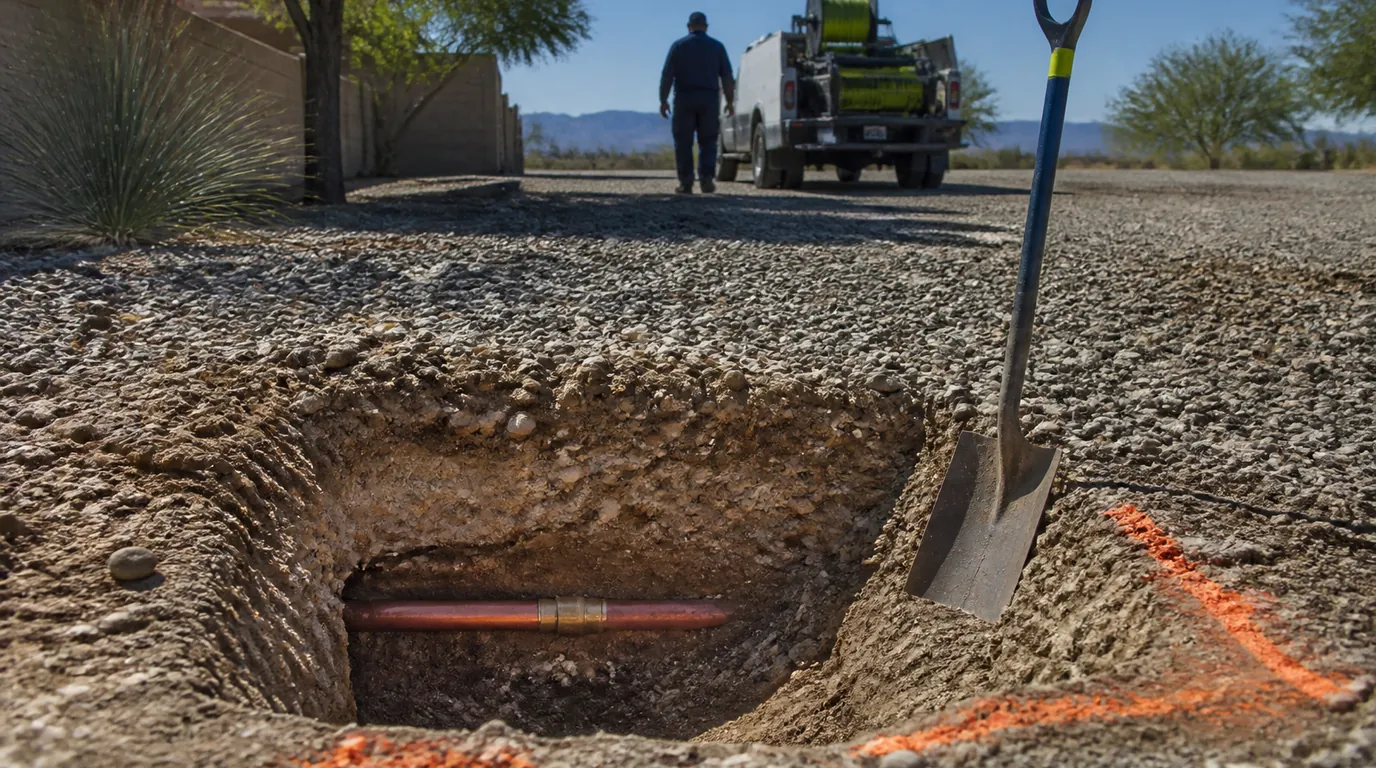
The service line is the buried pipe carrying water from the meter into the building. A failure shows up as soggy ground, hissing, or pressure that fades to nothing. A single break may be repairable, while pipe that keeps failing is usually replaced. If the yard is flooding or the taps have gone dry, treat it as urgent and call the 24/7 line.
Say where water is surfacing and how the pressure behaves, and a contractor is assigned.
The utility maintains the meter and the main in the street. The dividing point between the utility's pipe and the homeowner's pipe is not the same everywhere. Ask the City of Tempe where its part ends before you pay for any work.
A break before the meter is for the utility to fix. A break after it is a plumbing job.
One break in otherwise healthy pipe can often be patched. A line that has failed repeatedly, or one made of worn-out material, usually deserves replacement.
A new line can go in through an open trench or through trenchless methods that need just a couple of access pits. Trenchless work spares the landscaping but only suits certain soils and pipes. Ask which approach fits your lot.
Many Tempe service lines are decades old. Copper pipe can pit from the inside, and mineral-rich water speeds scale in some pipe types. The city's water quality report lists what is in the supply.
A collapse in pressure at every tap at once points to the service line or the main shutoff. A single weak faucet usually points to that fixture.
Pricing depends on how much pipe, how deep and what is on top of it.
Pricing depends on access and pipe type. Ask what happens to the landscaping and who restores it.
Underground lines must be located and marked before digging. Arizona runs a one-call system for this, reached by dialing 811, and a contractor will normally handle the request.
Check where the main shutoff and the pressure regulator are. A bad regulator can mimic a leak by causing high or low pressure.
A failing service line gives clues outside before it does inside.
First the contractor verifies the leak is on your side of the meter. Then listening gear, pipe tracing and pressure checks shrink the break to a short stretch, and tracer gas can help with plastic pipe. Ask which of these will be used on your line.
Long runs complicate the search. If the line is very long, as on a deep lot or a property set far from the meter, expect the search to take longer and plan for access at both ends.
Weak pressure at every fixture can come from a failing pressure regulator, a partly closed main valve, a leak in the service line or scale inside old pipe. A plumber checks static and running pressure with a gauge to tell which.
If only one fixture is weak, look at that fixture first. Aerators and cartridge stops fail more often than mains.
Replace a service line that has failed more than once, runs through corroded pipe or uses a material the contractor flags. Repair a single break in otherwise healthy pipe. If the pipe is old enough that you suspect lead, ask the contractor and the City of Tempe how to test it. Do not guess.
Pipe bursting and similar methods replace a line with small access pits. Trenching suits short runs or lots with open ground. Ask which fits your driveway, trees and landscaping.
Sometimes the meter box is the culprit. A failing shutoff valve or a corroded fitting leaks into the box. The utility owns the meter, so call the City of Tempe about anything on the street side.
A leak near the valve outside the house can be a hose bib, a pressure regulator or the main shutoff. A contractor can tell which part by closing each in turn.
Pinpoint hidden water loss behind drywall, under flooring or along the pipe buried in the yard.
Test the pressure, then fix the aerator, valve, regulator or supply pipe that is starving your taps.
Shut off the flow, then swap out the cracked or split section of pipe.
Look for wet ground, a hissing sound or a meter that runs with the house off. Falling pressure at every fixture is another sign.
That depends on where the utility's responsibility ends. Ask the City of Tempe to confirm the dividing point before you commit to repairs.
In some cases. Trenchless work uses small pits but only suits certain soils, so the contractor surveys the route first.
Shut the main valve at the house or in the meter box. Keep everyone off soft ground and note the spot where water appears.
Yes. Phone at any hour, say where water surfaces, and close the main valve at the house or meter box while you wait.
Yes, phone at any hour. Tell the dispatcher where water surfaces and whether pressure remains, and close the main valve at the house or meter box meanwhile.
Price follows length, depth, what lies over the pipe and the method used. A clear quote comes from the dispatcher before work starts.
Yes, that is the usual starting point. The contractor traces the line and narrows the leak to a short stretch before any digging.
Same-day visits are available for assessment. Replacement scheduling depends on the contractor and permits, so ask on the call.
Ask the contractor and the City of Tempe how to check your line material. Tempe's Environmental Services answers lead and copper questions at 480-350-4311.
A service line break, a regulator failure or a partly closed main valve can do it. A gauge test tells which.
Figures and statements on this page that come from outside references are listed here.
Close the main if you can reach it, then ring the dispatcher and report where water is showing.
Service area centered on Tempe and nearby Maricopa County cities.