Water Line Repair & Replacement
Fix or renew the supply pipe running from the street meter to your home's main shutoff.
A shower that barely trickles, sinks that fill slowly, or taps that run dry all come down to pressure. Sometimes a clogged aerator is to blame, sometimes a half-shut valve or a worn regulator. Only a gauge reading settles which. A house with no water at any tap deserves a prompt call, day or night.
Say whether one fixture or every fixture is affected, and whether the water is weak or gone completely.
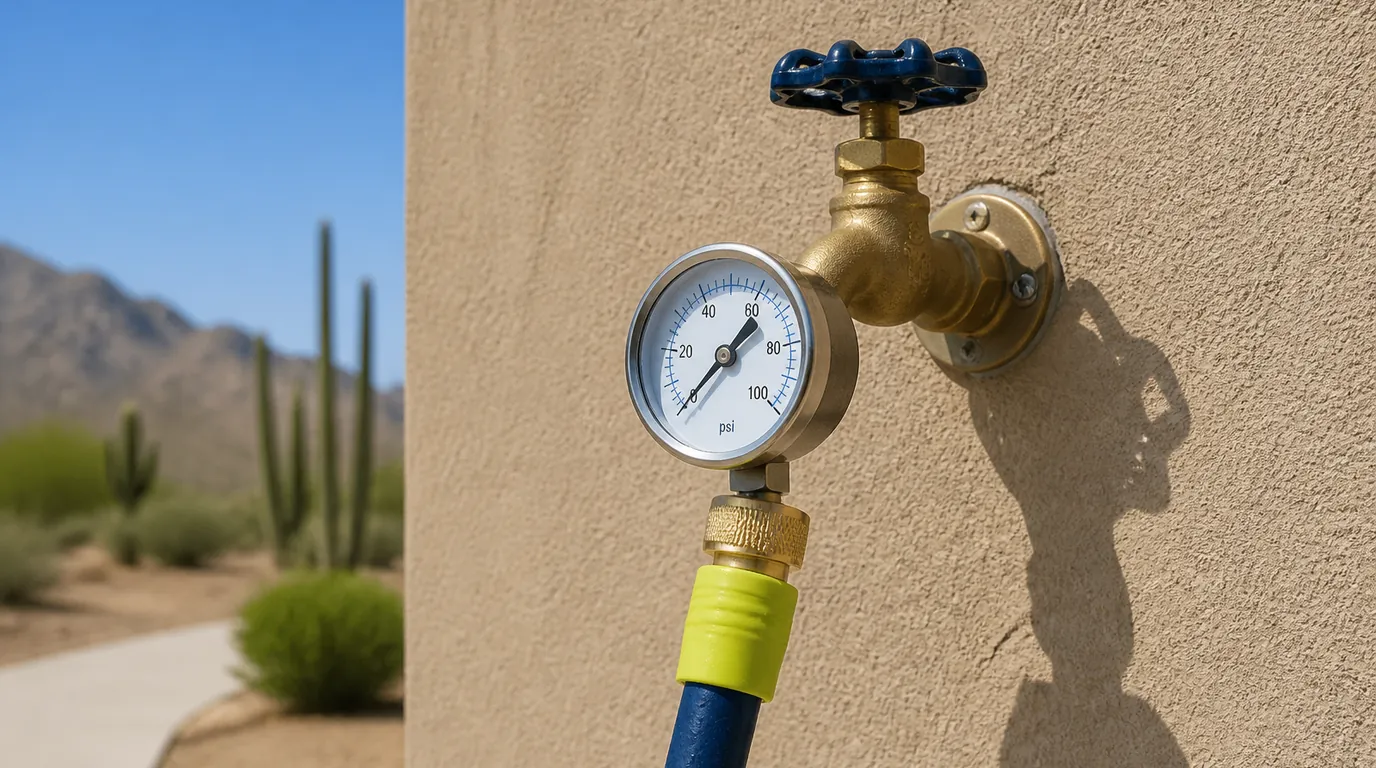
Start by noting which fixtures are weak and when it began. A change that arrived overnight suggests a failed part or a closed valve. A slow fade over months suggests scale or corrosion inside old pipe.
Confirm the house main is turned all the way open. A valve left partly shut after a past repair is a common culprit and can starve every fixture.
The plumber threads a gauge onto an outdoor spigot and reads the static pressure with all water off. A second reading is taken while fixtures run. A large drop between the two numbers points to a restriction somewhere along the supply.
A low static reading points to the regulator, the main valve or the service line. A normal static reading with weak flow at one fixture sends the search to that fixture instead.
A cleaned aerator and a replaced service line sit at opposite ends of the range, so the diagnosis comes first.
No figure is quoted over the phone. The contractor reads the pressure, explains the cause and gives a quote before work starts.
Mineral deposits build up inside pipes, aerators and valves over the years. Homes with older supply lines tend to lose flow gradually as that scale narrows the pipe.
A pressure problem that hits the whole house at once is a different animal. Treat sudden total loss as urgent, and call the 24/7 line.
A clogged aerator or showerhead is cleaned or swapped in minutes. A failing regulator is replaced, then adjusted to a sensible setting. A restricted service line is repaired or renewed, which is a larger job.
Scale-choked galvanized pipe cannot be cleaned out for long. Where the walls are full of it, repiping is usually the lasting answer. A good contractor shows you the reading and the cause before recommending any of this.
Weak flow has many causes. These clues help separate a quick fix from a deeper fault.
Open every tap for a moment and note which ones are weak. Confirm the main valve and any valve near the water heater are fully open. Unscrew an aerator and look for grit.
Photograph the meter and the area around the main valve. If you have a pressure gauge, screw it onto an outdoor spigot and write down the number. Pass that reading to the dispatcher so the visit starts with facts.
If water has stopped entirely, ask a neighbor whether their supply is off too. A neighborhood outage is a utility matter, while a dry house on a normal street points to your own line or valve.
A pressure diagnosis follows the water from the street toward the tap. The plumber reads the pressure at the spigot, checks the regulator and main valve, then tests individual fixtures. Each step rules out a cause until one is left.
Tools are simple: a pressure gauge, a flashlight and basic hand tools. When a buried line is suspected, the contractor may suggest leak detection before any digging. You are told what was found before a repair is proposed.
Most pressure problems are fixed by repairing one part. A regulator that has aged out is usually replaced, and a fixture cartridge is swapped for a new one. These are routine visits with little disruption.
Replacement enters the picture when the pipe itself is the problem. Heavy scale inside old galvanized lines, or a service line that has failed more than once, can make a section or the whole run worth renewing. The page on repiping explains what that project involves.
Same-day visits are available, and the line is answered around the clock. Describe the pattern, say how long it has lasted and whether water is running anywhere it should not. The dispatcher then arranges the earliest slot a local contractor can offer.
At the visit, ask what the reading was, what the cause is and what the quote covers. You choose whether to go ahead. If the cause turns out to be a leak, the leak detection page describes the next step.
Fix or renew the supply pipe running from the street meter to your home's main shutoff.
Pinpoint hidden water loss behind drywall, under flooring or along the pipe buried in the yard.
Swap aging supply piping throughout the house when patches keep failing.
Usually the trouble is local, such as a gritty aerator, a tired cartridge or a stop valve under the sink that is not fully open. Those get checked before the whole house is tested.
It can. Water that escapes through a split pipe never arrives at the faucet. If the meter dial keeps creeping while every tap is closed, a leak is likely.
It is better to test first. A gauge reading shows whether the regulator is at fault, and a wrong setting can strain fixtures and hoses.
Yes. The dispatcher can arrange a visit to test the pressure and replace the regulator if it has failed.
Yes, the line is answered all night and on weekends. Check whether neighbors are affected and whether the main valve is open, then phone. Say whether any tap still gives a trickle, which helps the dispatcher judge how urgent it is.
Ring the dispatcher, say how many fixtures are affected, and a plumber is lined up to test the pressure.
Service area centered on Tempe and nearby Maricopa County cities.