Water Heater Installation & Replacement
Remove the dead tank and set a new heater matched to household size, fuel supply and available space.
Cold showers and a puddle by the tank are the two calls that come in most. Some heaters can be saved with a part. Others have reached the end, and a repair would be money wasted.
Describe what the water heater is doing on the call and a nearby contractor gets assigned.
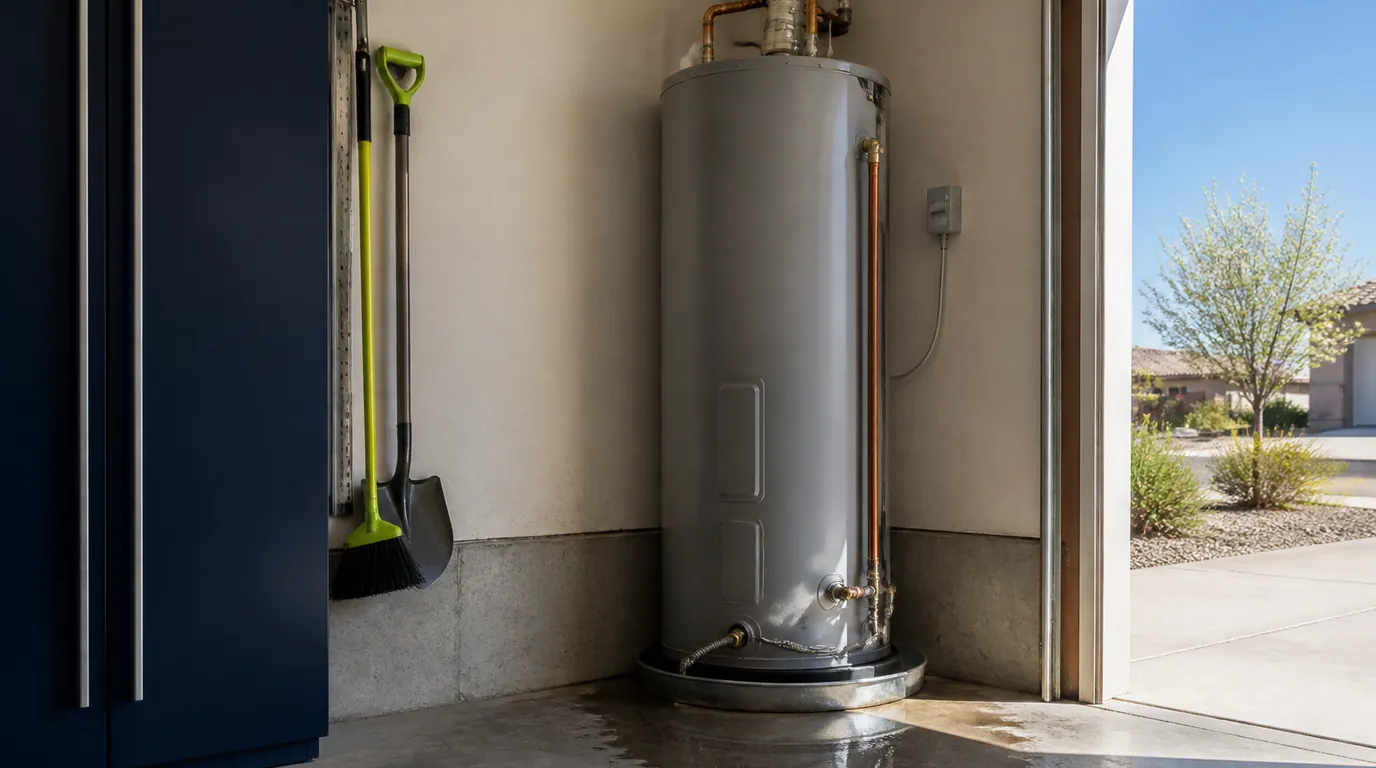
Repair makes sense for a failed element, thermostat, igniter or valve on a tank in decent shape. Replacement makes sense when the tank itself is leaking, or the unit is old and failing in several ways.
Ask the contractor for the age of the heater, which you can read from the serial number, and what each repair would cost against a new unit.
Not all water near a heater comes from the tank. Check the supply and outlet connections, the relief valve and its pipe, and the drain valve. Tighten or replace the part if the leak is there.
Seepage straight out of the tank shell or its base means the inner steel has given way. Close the cold inlet, switch off the electricity or gas, then phone.
Cost follows the part and the unit.
Request both a repair figure and a replacement figure so they can be compared.
The city says Salt River water carries more dissolved solids and Verde River water more hardness. Sediment collects in a tank over time, which is why flushing helps.
Many Tempe water heaters sit in garages where summer heat is intense. That does not harm the tank, but it can make a leak harder to notice until the floor is wet.
Gas models depend on a clear, properly sloped vent. If you smell gas, walk outside and phone 911 or the gas utility. Soot marks or a scorched outer jacket near the flue deserve a prompt service visit.
Check the relief valve line. It should run to a safe drain, never be capped.
Most failures give some warning before the cold shower.
Drips at a pipe fitting, the drain spigot or the relief valve can usually be fixed. Water escaping through the tank wall cannot, since the shell itself has failed. When the unit is past ten years old, ask for a replacement quote alongside the repair estimate.
Turn off the power at the breaker or set a gas heater to pilot or off. Close the cold water valve above the tank. Put a pan or towels under the leak and move stored items away from the floor. Do not open the relief valve for fun, since the water is hot.
On an electric heater, the check starts with the breaker, the reset button and the upper and lower elements. On gas, it starts with the pilot or igniter, the thermocouple and the gas valve. A heater that trips repeatedly points to a failing part or a wiring fault.
Hot water that runs short is often a lower element or a dip tube failure. Ask what the contractor measured before deciding on the repair.
Hybrid heat pump heaters have a compressor and need airflow and room. Service includes checking the filter, the condensate drain and the app or display codes. Not every contractor works on them, so state the brand when you call.
The sacrificial anode rod absorbs corrosion that would otherwise attack the tank. Swapping a spent rod can buy an older tank more time if done before the lining fails. Poor venting on a gas heater is a safety concern, not a comfort one.
Remove the dead tank and set a new heater matched to household size, fuel supply and available space.
Clear mineral scale from an on-demand heater, chase down fault codes, or install a new one.
Put in a softener or get a stalled one cycling and making soft water again.
Usual suspects: a tripped breaker, a burned-out element, a pilot flame that blew out, or a faulty thermostat. A plumber checks them one at a time.
If the tank body is the source, yes. Shut the cold inlet, kill the power or gas supply and make the call.
Water chemistry and upkeep change the answer. The contractor can judge your tank by its age and condition.
Same-day visits are available. Ask for the arrival window and whether parts are on hand.
Yes. Someone answers around the clock. Shut the cold inlet and the power or gas, then call.
Pricing depends on the part, fuel type and access. The dispatcher gives a clear quote before work begins.
Same-day visits are available. Shut off the power and the cold supply, then call and give the details.
Treat it as urgent. Close the cold inlet, shut off power or gas and ring the dispatch line.
Ask the dispatcher and give the brand. Not every contractor services them.
A tripped breaker or a heater that lost its pilot is the usual cause. Check the breaker and the reset button first.
Figures and statements on this page that come from outside references are listed here.
Phone the dispatch line and a local contractor will be arranged.
Service area centered on Tempe and nearby Maricopa County cities.