Water Heater Repair
Troubleshoot cold showers, tank leaks, rumbling and pilot or heating element faults.
A failed tank forces a quick decision. This page explains the choices so you are not guessing on the day.
Tell the dispatcher what you have now, and a contractor is lined up.
Tank size follows how many people use hot water and how at the same time. A bigger tank holds more, but also heats and stores more.
Ask the contractor to size the unit and explain the reasoning. First-hour rating matters as much as gallons.
A proper swap includes a new relief valve and drain line, correct venting for gas units, shutoff valves and a drain pan where required. Old units must be removed and disposed of.
Some jobs need a permit. Ask who pulls it and whether an inspection is included.
Many Tempe homes built from 1970 through 1999 are on the older side, and heaters in garages or utility closets can be a tight fit for a new tank. Measure before you shop.
Mineral content in the local supply favors regular flushing, and a softener can extend the life of a new heater.
Total cost reflects the unit and the work around it.
Ask for the full out-the-door price, including removal and permit.
Tankless units heat on demand and take less space. They cost more up front and need maintenance, covered on the tankless page. Heat pump and hybrid models use less electricity but need airflow and room.
Ask for the trade-offs in your home, not in general.
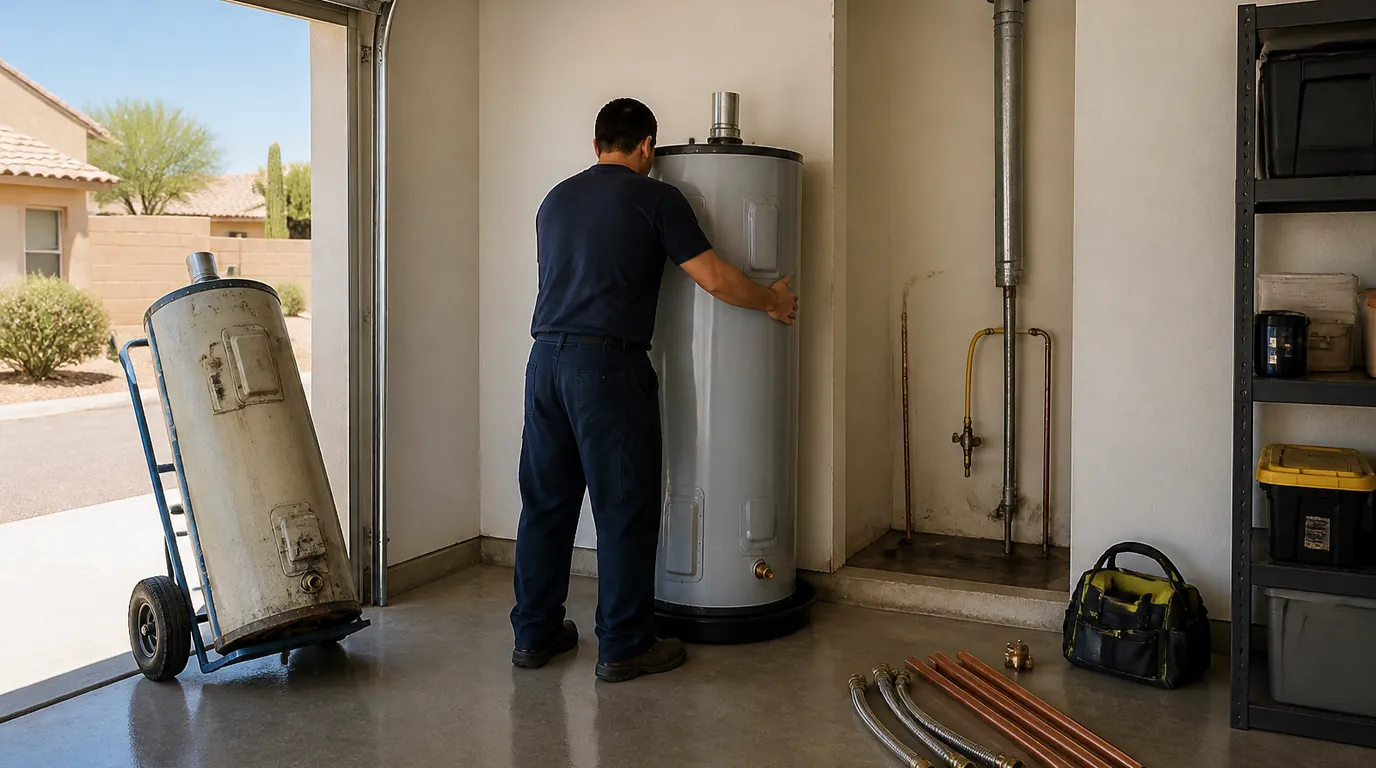
A failed tank often means a same-day swap. The plumber confirms the old unit is the problem, shuts off water and power or gas, drains the tank, removes it and sets a new one. Gas units need venting checked and a leak test on the gas line.
Ask what the quote includes: the unit, a new relief valve, supply connectors, a drain pan, haul-away and any permit. Ask how long the work will take and whether you will have hot water that night.
Changing from gas to electric or from a tank to a hybrid unit involves venting, wiring and sometimes the gas line. These changes affect cost and permits. A contractor reviews your closet or garage, your panel and your gas supply before recommending a switch.
Heater vents moved to a new route also need a code-compliant layout. Share photos of the space on the call.
If a heater flooded the garage, the water damage and the replacement are two separate jobs. Get the heater safe first. The water damage page covers drying.
Troubleshoot cold showers, tank leaks, rumbling and pilot or heating element faults.
Clear mineral scale from an on-demand heater, chase down fault codes, or install a new one.
Put in a softener or get a stalled one cycling and making soft water again.
A like-for-like swap often takes a few hours. Changes to venting or fuel take longer.
Often, but gas lines, venting and electrical may need changes. A contractor reviews your house.
Often yes. The contractor can tell you and usually handles it.
The installer normally removes and disposes of it. Confirm that in the quote.
Call at any hour. A failed tank is often swapped on the same visit, and timing depends on the contractor and the unit in stock.
Pricing depends on the unit, capacity, venting and permit. The dispatcher gives a clear quote before work begins.
Same-day visits are available for many swaps. Ask on the call and confirm unit availability.
Often. Wiring, venting and the panel need review, so the contractor checks your house first.
Turn off power and the cold supply, then call. A leaking tank means replacement.
Figures and statements on this page that come from outside references are listed here.
Call the 24/7 line and talk through replacement options. A dispatcher lines up a local contractor.
Service area centered on Tempe and nearby Maricopa County cities.