Burst Pipe Repair
Shut off the flow, then swap out the cracked or split section of pipe.
Water that sits in walls and floors keeps causing harm after the pipe is fixed. Drying fast limits damage and lowers the chance of mold. Stopping the source is step one, and drying is step two.
This page has a dedicated phone number that is answered day and night. If you can, stop the water at its source first.
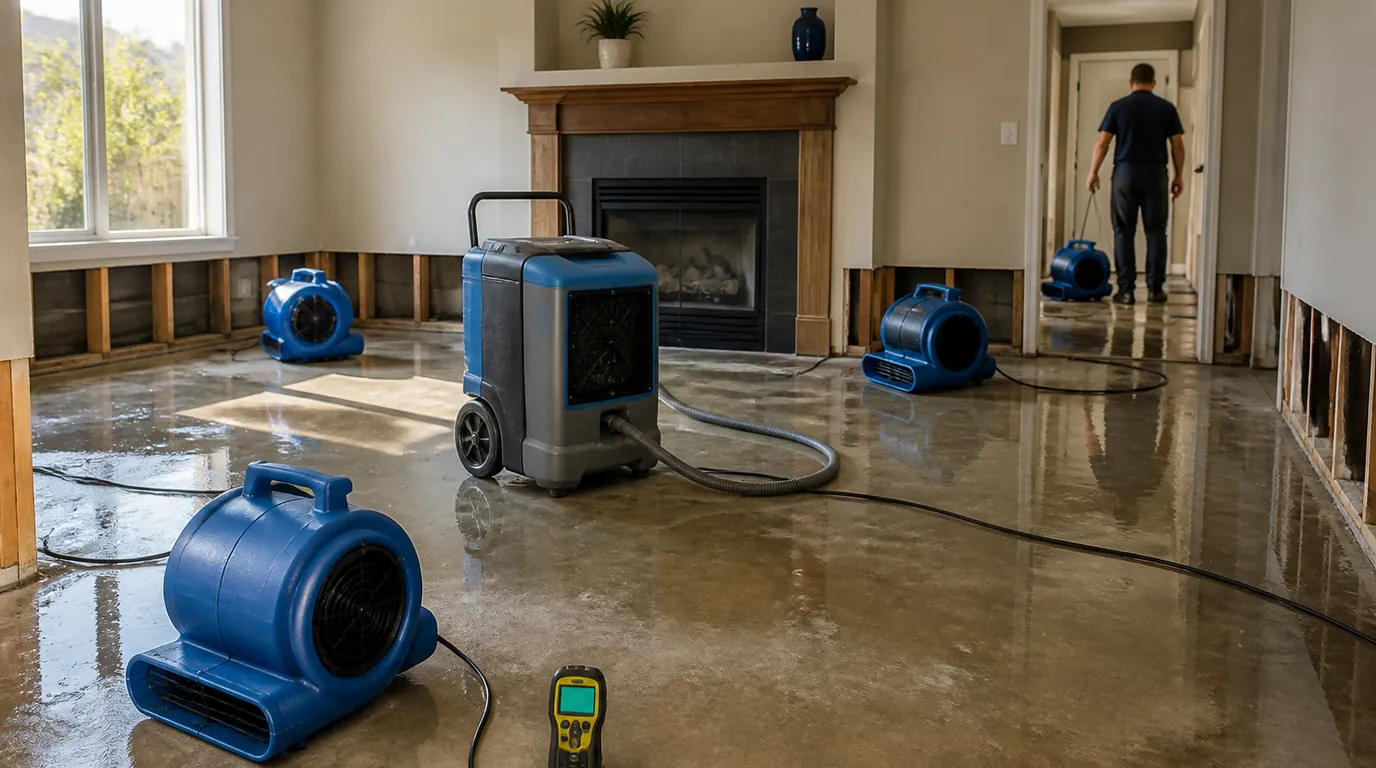
Drywall, insulation, carpet pad and wood absorb water quickly. Left wet, they can grow mold in a matter of days, and wood can warp.
Professional drying uses air movers and dehumidifiers to pull moisture out, and meters to confirm walls and floors are dry.
A crew assesses the affected area, removes standing water, and removes materials that cannot be saved. Equipment then runs until readings show the structure is dry.
Ask for moisture readings in writing. They show when drying is finished and help with insurance.
Cost tracks how large the loss is and which materials got wet.
Ask for a written scope and an itemized estimate before work starts.
Tempe's low humidity helps materials dry, but a hidden leak can still soak a wall or floor. Slow leaks in a dry climate may go unnoticed until stains appear.
Monsoon season runs from mid-June through September, and storm runoff can find its way into garages and ground-level units.
Call your insurer early. Keep photos, receipts and the plumber's report on the cause. Policies often cover sudden damage but not slow leaks.
If you rent, tell the owner or manager right away, and keep a copy of the message.
Water often shows itself late. These clues mean it is time to call, even if the pipe has stopped dripping.
A leak from above, such as a toilet, dishwasher or upstairs bath, usually wets a ceiling and the wall under it. The pipe or fixture needs repair first, and leak detection helps when the source is hidden.
A supply failure or a heater that gives out floods fast. The burst pipe and water heater repair pages describe how the cause is fixed while drying gets planned.
Rain that enters through a foundation or a low door is a different problem. No pipe is at fault, so a plumber cannot fix the cause, and the drying crew works with the owner on where the water is entering.
Sewage is the gravest case. A drain that backs up needs drain cleaning or sewer line repair and then careful cleanup. People and pets should stay clear until that is done.
Close the main valve or the stop under the leaking fixture. Cut power to a soaked room at the panel only when you can reach it without stepping in water. If you cannot, stay out and tell the dispatcher.
Lift small items, rugs and electronics out of the wet area. Photograph the damage and the source before you move anything. Do not use a household vacuum on standing water.
Open interior doors so air can move, and note when the leak started. If a ceiling is bulging with water, tell the dispatcher before anyone pokes it, since a controlled release is safer than a collapse.
The crew starts with a moisture meter and maps how far the water traveled. Walls, floors and ceilings often hold more water than they show, so readings are taken beyond the visible stain.
Next comes a sorting step. Materials that can dry in place stay. Soaked carpet pad, insulation and soft drywall often come out. Wet porous materials hold water and can grow mold, so removing them early limits the rebuild.
Drying is aimed at the 24 to 48 hour window that the EPA describes for preventing mold growth. Equipment stays until readings match dry reference spots, and you can ask to see the numbers.
Mold shows up when damp materials stay damp. The EPA says a moldy patch under about 10 square feet is often something an owner can clean, while a larger area, or a lot of water damage, is a reason to bring in a professional.
Sewage or other contaminated water is a job for professionals regardless of size. Porous items such as carpet and ceiling tile may need to be thrown away because mold grows into them.
Testing is another common question. The EPA notes that sampling is usually unnecessary when mold is visible, and that no federal limits exist to compare results against. Ask the contractor why a test is proposed and what decision it would change.
If you are buying or selling, a lender may want proof that mold was addressed before closing. Ask the contractor what written documentation comes with the work.
Standing water is removed first, then the structure is dried. In a basement or crawl space the work may include moving stored items, checking a sump pump and finding where water entered.
The focus here is water inside a building. Clearing a flooded yard, a pool deck or the outside of a wall is another kind of job, so mention it early and the dispatcher can say whether anyone can help.
Water that rises from the ground after heavy rain may be groundwater, not a plumbing failure. A plumber can rule out a broken line, and drainage fixes usually fall to a landscaper or a foundation specialist.
Drying ends with open walls, missing drywall and bare floors. Rebuilding is a separate scope with its own estimate. Ask whether the contractor handles drywall, paint, flooring and siding or only the drying.
Wood floors that cupped may flatten as they dry, though recovery depends on the floor and how long it was wet. A flooring professional should judge it before anyone sands or replaces boards.
Ask for one written scope that lists what is dried, what is removed and what is rebuilt, so insurance reviewers and owners read the same document.
Start the record before anything is moved. Photograph and film each affected room from several angles, including the source of the water, the damaged materials and any belongings that got wet. Note the date and time you discovered the problem and what you did first.
Keep samples or photos of damaged items, receipts for emergency supplies and a list of everything that was lost. Do not throw away wet materials before the insurer or adjuster has seen them, unless they pose a health risk.
Call the insurer promptly and ask what they need. Policies differ on what counts as covered damage, so get the answers in writing where you can. A restoration company can often provide moisture readings and a drying log that support the claim.
Do not enter a room with standing water if outlets, cords or appliances are submerged. Turn off the power to the area from the panel, standing on a dry surface. Avoid contact with water that may be contaminated, such as water from a sewer backup, and keep children and pets away.
Open windows if the weather allows and the air is not worse outside. Remove valuables that are dry and move furniture to a dry room. Wait for a professional before you try to rebuild anything.
Shut off the flow, then swap out the cracked or split section of pipe.
Pinpoint hidden water loss behind drywall, under flooring or along the pipe buried in the yard.
Troubleshoot cold showers, tank leaks, rumbling and pilot or heating element faults.
Once the water is off. EPA guidance is to dry wet materials within 24 to 48 hours, which is how mold is usually avoided.
Sudden events are often covered, but policies vary. Call your insurer early.
Yes, or at least stop the water. Drying does not help if the source keeps running.
Ask for moisture readings before and after drying.
Often not. The EPA says sampling is usually unnecessary when mold is visible. Ask why a test is proposed and what it would change.
This line handles water indoors. Describe what you need, and the dispatcher will tell you if a contractor can take it.
Ask on the call. Crews usually place and monitor drying equipment, because their readings decide when it can come out.
Ask what written documentation the contractor provides when the work is finished, and share the lender's requirements before work begins.
Yes, the number on this page rings through at all hours. If you can, close the valve at the source before you dial.
Figures and statements on this page that come from outside references are listed here.
Call the water damage line, day or night. A dispatcher lines up a local contractor.
Service area centered on Tempe and nearby Maricopa County cities.