Leak Detection
Pinpoint hidden water loss behind drywall, under flooring or along the pipe buried in the yard.
A burst pipe moves quickly from nuisance to damage. Stop the flow first. Then comes the repair, and then a decision about whether one split pipe means more are coming.
Close the main valve, then call. Describe where the water is and what it is soaking.
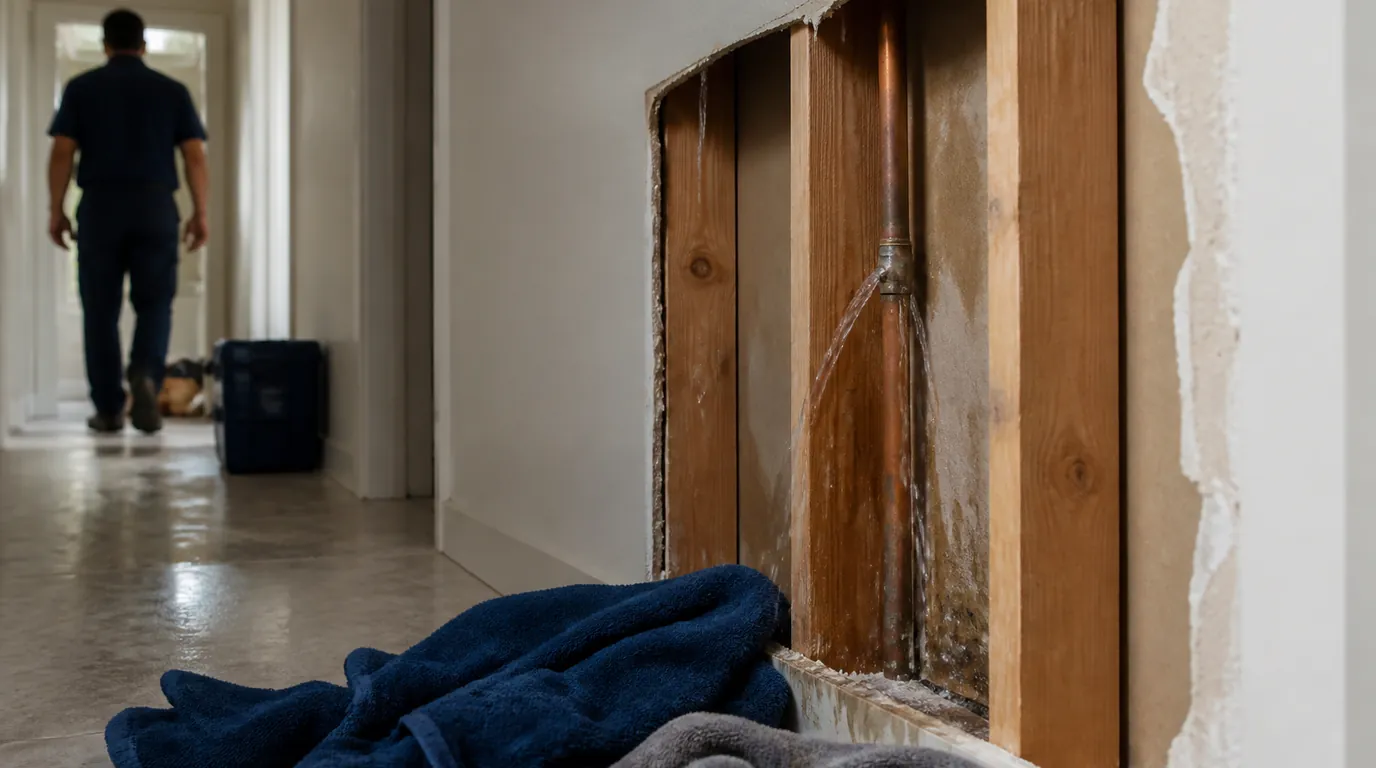
Pipes burst from age, corrosion, high water pressure and physical damage. In Tempe, freezing is a rare cause, so splits more often come from worn pipe, brittle fittings or a faulty pressure regulator.
A cracked elbow or coupling often looks like a burst pipe, but the fix is smaller. The plumber finds the actual point of failure before choosing a repair.
A short split in sound pipe can be cut out and replaced with a new section. Where pipe is brittle or corroded, a patch may fail again beside the repair. In that case replacing a longer run costs more now and saves repeat visits.
Different materials repair differently. Copper, CPVC, PEX and galvanized steel each need specific fittings. Ask the contractor what they plan to use for your pipe.
July highs in Tempe average about 106 degrees. Attic pipe and hoses in direct sun take that heat for months, and rubber hoses and plastic fittings age faster as a result.
With most Tempe homes built from 1970 through 1999, plenty of supply pipe is now past middle age. A single burst is often the first sign of a pattern.
The size of the break matters less than where it is and what has to be opened.
Ask whether the quote covers drywall patching or only the plumbing repair.
Cutting the supply is only the first step. Standing water soaks drywall, insulation and flooring, and moisture can lead to mold if it stays. Drying is a separate job from the pipe repair.
Keep your receipts and photos. Insurers often ask for proof of when the break happened and what was done to stop it.
Not every pipe failure gushes. Many start small.
A valve that cracks or snaps off under a sink, behind a toilet or at a washer can flood a room. The first move is the main valve. The second is to note the part and its size so the plumber arrives with a matching replacement.
Old multi-turn stops and braided hoses fail without warning. If one looks crusty, it is worth replacing during a repair visit instead of waiting.
Copper can be soldered or joined with push fittings. CPVC is brittle and can crack with age. Galvanized steel corrodes from the inside and often fails at threaded joints.
When one section breaks, the next may be close behind. Ask the contractor to inspect nearby runs and show you their condition.
If a leak returns after a repair, a fitting may be loose or a pipe may have been stressed during the work. Call the contractor who did it first. If you cannot reach them, say so on the call so the new plumber knows what to check.
A leak behind a shower wall after a valve change may come from a cross-threaded fitting. Describe the prior work to the dispatcher.
Many callers want a quote to fix a known leak. The price depends on the pipe, its location and how much wall or floor must open. The dispatcher gives a clear quote before the work starts. Ask whether drywall repair is included.
Pinpoint hidden water loss behind drywall, under flooring or along the pipe buried in the yard.
Swap aging supply piping throughout the house when patches keep failing.
Restoration after a leak, burst supply line or storm intrusion: drying first, rebuilding second.
Close the main water valve, open a low faucet to relieve pressure, and keep water away from electrical items. Then call the line.
Often the resulting water damage is covered even when the worn pipe is not. Check your policy and call the insurer early.
If the pipe around the split is sound, a section repair is reasonable. If it is brittle or pitted, ask about replacing a longer run.
Not on the affected line. Keep the main valve closed unless the plumber says otherwise.
Pricing depends on the pipe type, where it is and how much must be opened. The dispatcher gives a clear quote before work begins.
Take photos, leave the main valve closed and call. The plumber can often repair the break the same day.
Yes. The plumber locates it, opens the smallest practical access and repairs or replaces the section.
Yes. Give the location and the fixture, and say whether water is still flowing.
Figures and statements on this page that come from outside references are listed here.
Close the main valve and call the 24/7 line. The dispatcher will ask where the water is.
Service area centered on Tempe and nearby Maricopa County cities.