Burst Pipe Repair
Shut off the flow, then swap out the cracked or split section of pipe.
When a pipe breaks, the main valve is the first thing to reach. Locate it now, test it once and remember where it is. Five minutes today can prevent a flooded floor later.
By the Tempe Express Plumbing team ·
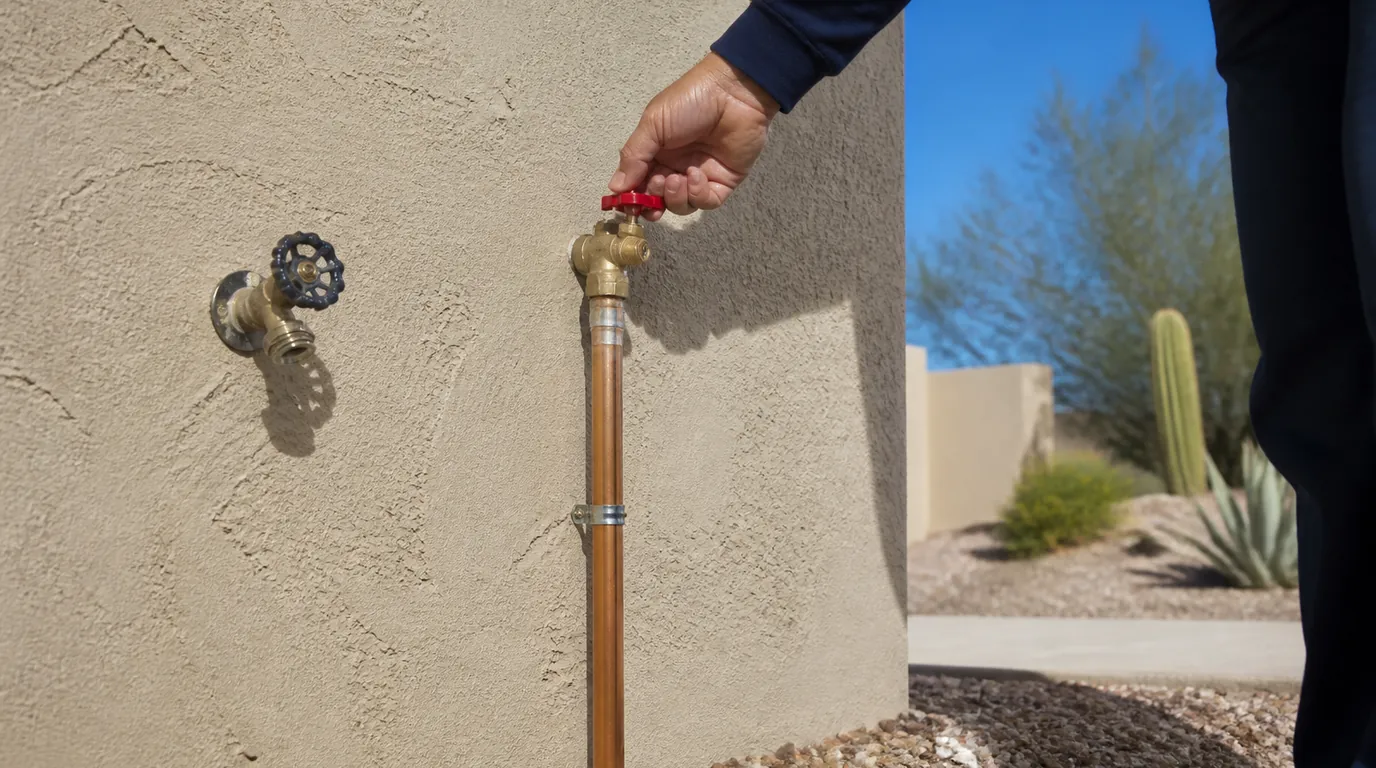
Look where the water line enters the house. Common places include a wall in the garage, near the water heater, a utility closet or an exterior wall facing the street.
There may also be a shutoff at the meter box near the curb. That one belongs to the utility, but a valve on your side of the meter may be yours to use.
A gate valve has a round handle that takes several turns. A ball valve has a lever that moves a quarter turn, lying along the pipe when open and across it when closed.
Gate valves can seize with age. Ball valves are more reliable.
Learn which type you own before an emergency.
| Valve | How it works | Watch for |
|---|---|---|
| Gate valve | Round wheel, several clockwise turns | May seize or break |
| Ball valve | Lever swings a quarter turn | Lever across the pipe is closed |
| Meter box valve | Shutoff on the utility side | Last resort if yours fails |
Rotate a round handle clockwise until it stops, without forcing it. Swing a lever a quarter turn so it lies across the pipe.
Open a low faucet to confirm the flow stops. Then open a high one to let the pipe drain and relieve pressure.
Close the valve once a year and open it again. If it is stiff, spray a little lubricant on the stem and work it gently. A valve that never moves can fail when you need it.
If it leaks at the handle, tighten the packing nut slightly or ask a plumber to replace it.
Never lever a stuck valve with a wrench, because the stem can snap and leave you with no shutoff. Use the meter-box valve if it is safe to do so, then call.
See burst pipe repair for what happens next.
Toilets, sinks and washers have their own small valves. They let you stop one fixture without losing water to the whole house.
Old stops can seize. Replacing them during a repair visit is worth the small cost.
Shutting off the main also stops the heater refilling. If the heater is leaking, close the cold inlet valve above it, and turn off power or gas.
See water heater repair for what the plumber does next.
Photograph the damage and write down when the trouble began. Lift belongings off wet floors, then phone the dispatcher and report what you shut off.
If water has soaked floors or walls, read about water damage restoration for the drying step.
A waterproof tag on the main valve saves precious seconds when someone else needs it. Write the word MAIN with a permanent marker, and add a second tag on the water heater and the irrigation shutoffs. Take a photo of each location and keep it on your phone.
Tell everyone in the household where the valve is and how it turns. A guest, a house sitter or a tenant is more likely to act quickly if the information is written down. In a rental, ask the landlord or manager to confirm the location and keep a note on file.
Valves that sit untouched for years can seize. Once or twice a year, close the main valve fully and open it again. Turn it slowly and listen for grinding. A valve that moves easily is ready for an emergency, while one that fights you may need replacement before it fails.
If the stem leaks when you operate it, a packing nut adjustment may stop the drip. A valve that will not close all the way should be replaced by a plumber, since a shutoff that does not shut off defeats its purpose. The water line repair page lists the related work.
After a repair, open the main valve slowly rather than all at once. Open a faucet at the lowest point of the house to let air escape, and then one at the highest point. Run water until it comes out steady and clear, which flushes sediment and air from the lines.
Check the repaired area, the water heater and any appliance connections for drips. Look at the meter with everything off to confirm it is still. A small leak found now is much cheaper than one found next week.
Homes with a softener, a filtration system, a pool autofill or a hot tub often have extra shutoffs. Turning off the main stops all of them, but you may also want to close the individual valves so the equipment does not restart unexpectedly when the water returns. Switch off the water heater breaker or set the gas control to pilot if the house will be without water for a long time.
Keep the manuals or a photo of each unit's label near the main valve. A short list taped inside a cabinet door, with the location of each shutoff and who to call, saves time during an emergency and helps a house sitter act with confidence.
If you are leaving for a trip, closing the main valve is a simple way to prevent a surprise flood. Run a faucet briefly afterward to relieve pressure, and ask a neighbor to check the house if you are gone for more than a week.
Pick a quiet evening and walk everyone to the main valve. Have each person close it and open it again while you watch. Children old enough to turn a lever can learn too. A calm rehearsal makes the real thing less stressful and exposes valves that stick.
Often on a garage wall, near the water heater or on an exterior wall. Look where the line enters.
Check the meter box at the curb. Then call a plumber to add a proper shutoff.
Clockwise for a round handle. A lever turns a quarter turn across the pipe.
Yes, if the valve moves easily. Do not force a stuck one.
Shut off the flow, then swap out the cracked or split section of pipe.
Troubleshoot cold showers, tank leaks, rumbling and pilot or heating element faults.
Fix or renew the supply pipe running from the street meter to your home's main shutoff.
Read the meter, dye the toilet tanks and work through a few easy checks to narrow down where water is escaping.
A puddle beneath the heater might be a loose fitting or a rusted-through tank. Learn how to tell them apart.
Water at the handle, the spout or the wall behind a hose bib each mean something different. See which one you have.
Ring the dispatcher and say what you tried, and a local contractor is lined up.
Service area centered on Tempe and nearby Maricopa County cities.