Faucet & Sink Repair
Stop a faucet drip, bring back full flow, free a frozen shutoff or fix a leaking outdoor bib.
A spigot that drips has a worn part or a cracked body. Where the water appears tells you which, and whether it is leaking inside the wall as well.
By the Tempe Express Plumbing team ·
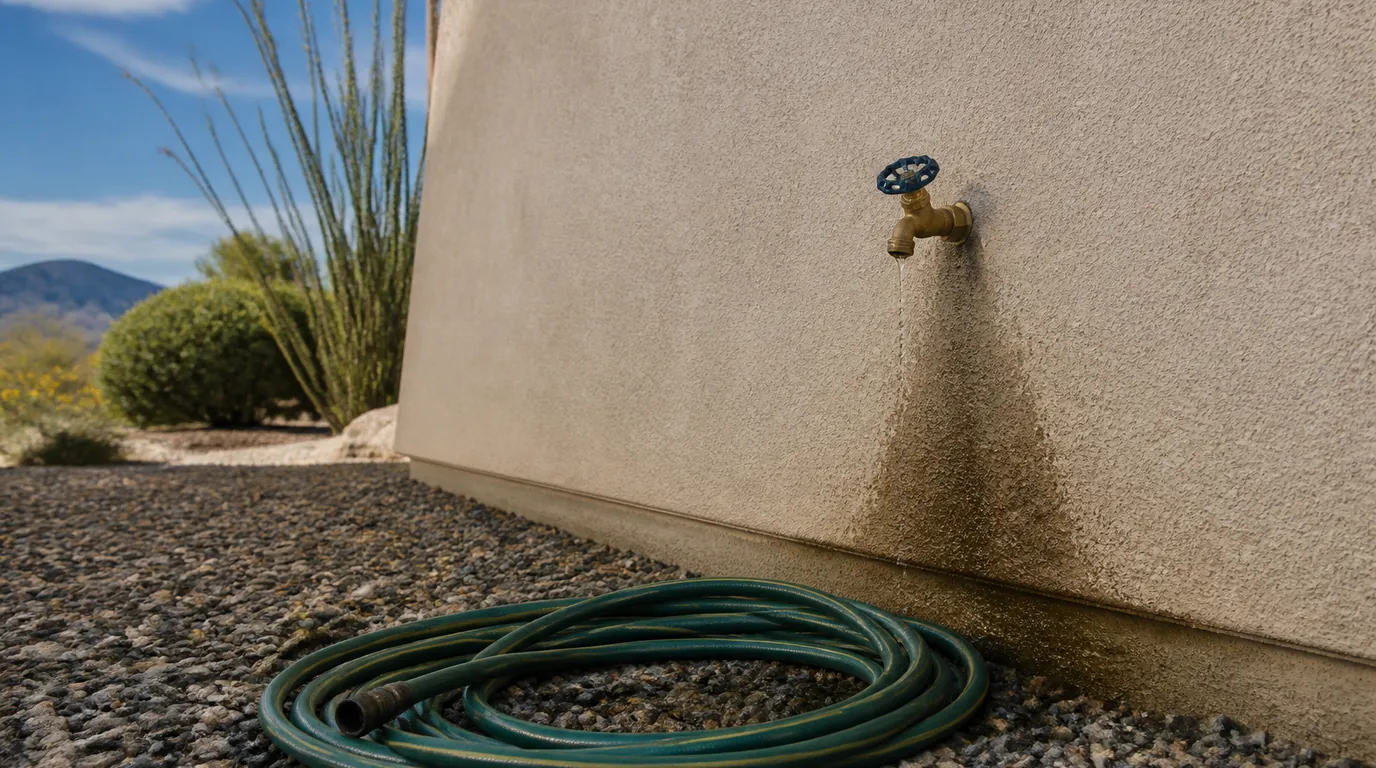
Water at the handle means a worn packing nut or stem. Water from the spout when the tap is off means a worn washer or seat. Water at the wall means a cracked pipe or a loose connection.
Water inside the wall is the serious one. Stains on interior drywall or a damp garage wall point to it.
Tighten the packing nut a quarter turn with the water on. If that stops it, you are done. If not, the packing may need replacing.
A handle that is stiff or loose often has mineral buildup. A plumber can rebuild the stem.
A washer or seat that is worn lets water escape past the closed valve. Replacing the washer is a simple repair. Seats that are pitted may need the whole valve replaced.
Sun and heat shorten the life of rubber parts. Spigots on the south or west side of a house wear fastest.
A leak where the spigot meets the wall can mean a failed solder joint or a crack in the pipe behind. Water may run inside the wall without any outside sign.
Close the shutoff for that line and call. See faucet and sink repair for the repair path.
The location points to the part.
| Where | Likely cause | Fix |
|---|---|---|
| Behind the handle | Worn packing | Tighten or replace the packing |
| From the spout when off | Worn washer or seat | Replace washer or valve |
| At the wall | Cracked pipe or joint | Plumber repair |
| From the vacuum breaker | Failed breaker cap | Replace the breaker |
Many hose bibs have a small vacuum breaker on top. If it drips when the hose is in use, that is normal. If it drips constantly, it has failed and needs replacing.
The device keeps hose water from being drawn back into the house supply.
Valley summers bake outdoor plumbing. Hoses left attached to spigots hold water against the valve and speed wear. Remove them when not in use.
Mineral scale in the water also grinds on seats and stems.
A spigot more than a decade old, or one that has leaked before, is cheaper to replace than to repair again. A plumber can install a new hose bib and test the line.
If you need extra outdoor faucets for a yard, they can be added at the same visit.
A steady drip adds up. One drip a second wastes thousands of gallons a year. If your bill is rising, a spigot leak is one cheap thing to rule out.
See leak detection if the meter still moves after you fix the spigot.
Many homes have an interior shutoff for each outdoor spigot, often under a sink or near the wall where the pipe goes through. Look for a small valve with a screwdriver slot or a round handle. Closing it lets you work on the spigot without turning off the whole house.
If there is no valve, you will need to close the main valve first. Open the spigot to drain the line and relieve pressure before you loosen anything. Keep a bucket handy, because some water remains in the pipe.
For a leak behind the handle, turn off the water, unscrew the handle and look for the packing nut under it. Tighten the nut a quarter turn and test. If the leak continues, remove the nut, wrap fresh packing string or replace the washer around the stem, and reassemble.
Do not over-tighten, since a stiff handle wears quickly and can crack. If the stem is corroded or the body of the spigot is damaged, replacing the whole spigot is simpler than repairing it.
A new hose bib is a modest project when the pipe is accessible and the connection is a threaded or sweat fitting. Copper fittings need soldering, while threaded or push-fit types can be done with basic tools. If the pipe is inside a wall, a plumber may need to open a small section of drywall to reach it.
Choose a model with a built-in vacuum breaker, which keeps water from flowing back from a hose into the house supply. The faucet and sink repair page covers outdoor spigots as part of its scope, and the dispatcher can tell you what a visit includes.
Ultraviolet light and heat make plastic hose connectors brittle. Keep a spare washer on hand, and hand-tighten hose couplings instead of using a wrench, which can squash the washer and the threads. Coil hoses in the shade when you can.
Leaving a hose attached under pressure keeps the valve loaded and can force water past a worn seat. Turn the spigot off at the handle and, if you have a shutoff inside, close that too when the hose will not be used for a while.
A spigot that leaks inside the wall is harder to spot. Look for staining on the interior wall, a musty smell or a meter that moves when the outdoor tap is closed. If you suspect it, schedule a visit before the damage spreads.
If a spigot leaks only when open, the problem is the valve. If it drips with the handle off, check the pipe behind it. Look inside the cabinet or garage wall on the other side for stains and corrosion. A green crust on copper or a rust bloom on steel signals a slow leak at the fitting.
A pressure test by a plumber can rule out a hidden pinhole in the supply line to the spigot. It takes little time and avoids guessing.
A worn packing nut or stem. Tightening the nut can stop it.
Yes, if water runs inside. Look for stains on the inside wall.
If it is old or has leaked before, replacement often costs less than repeated repairs.
Yes. The plumber runs a new line and adds a shutoff.
Stop a faucet drip, bring back full flow, free a frozen shutoff or fix a leaking outdoor bib.
Pinpoint hidden water loss behind drywall, under flooring or along the pipe buried in the yard.
Keep the irrigation backflow assembly tested and working so yard water never reaches drinking lines.
Certain Tempe properties must keep a backflow assembly and have it tested each year. Here is the city's stance.
Eight ordinary reasons a Tempe water bill climbs, plus how to separate a leak from heavy use.
Locate and test your shutoff before an emergency. This guide covers finding it, closing it and what to do afterward.
Call the 24/7 line and describe where the water shows. A dispatcher lines up a local contractor.
Service area centered on Tempe and nearby Maricopa County cities.