Sewer Camera Inspection
Watch live video from inside the sewer pipe when deciding on a fix, a listing or a purchase.
Roots seek out the moisture inside a sewer pipe. When a hairline crack or loose joint lets them in, they knit into a mat that snags whatever gets flushed.
By the Tempe Express Plumbing team ·
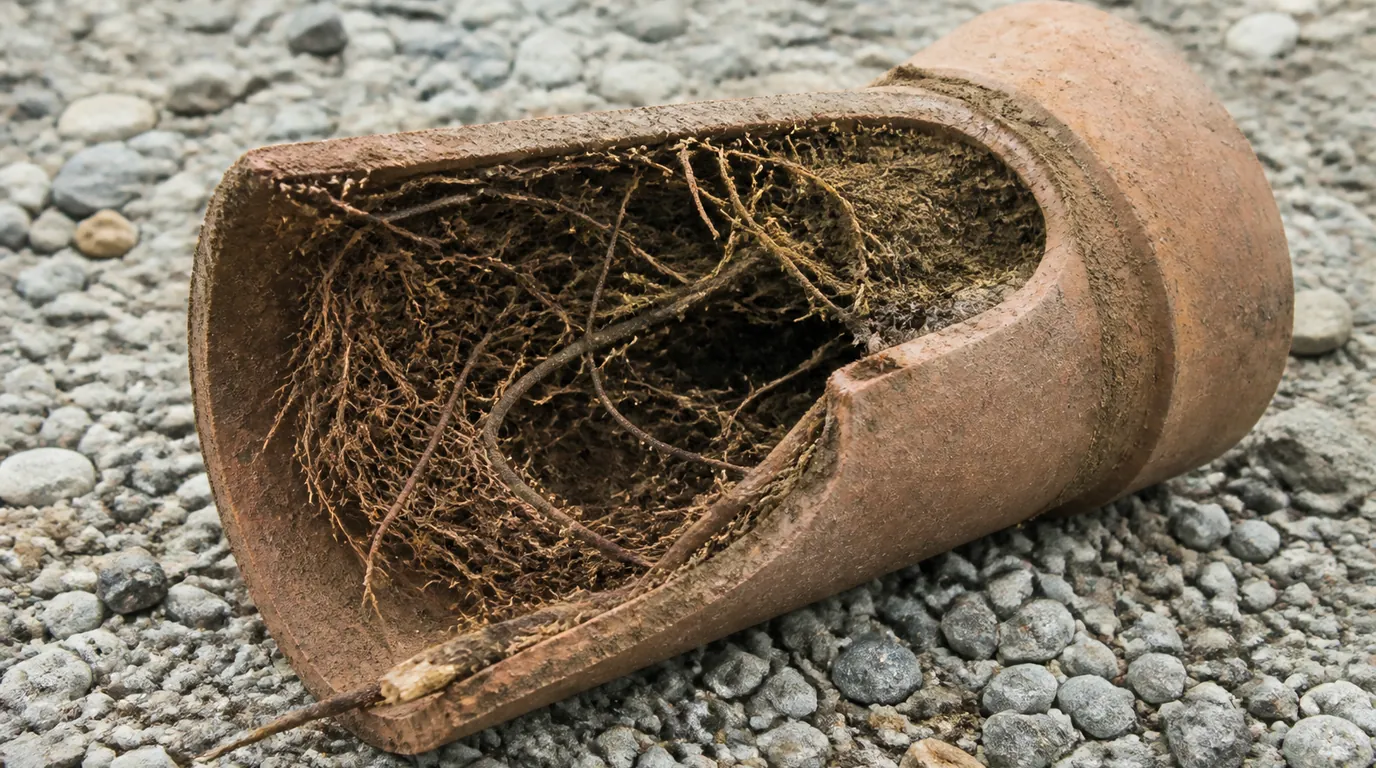
A sound pipe resists roots. They take advantage of a small crack, an offset joint or a loose coupling where moisture leaks out, then spread inside as fine hairs.
Over time those hairs thicken into a net that traps paper and grease. The blockage builds slowly, then all at once.
Early signs include several slow drains, gurgling toilets and a sewage odor. A blockage that returns every few months after clearing is the strongest hint.
Watch for a patch of unusually lush grass or sunken ground along the line. Those can hint at a leak, with roots following the water.
Any tree can send roots toward a sewer line, but large shade trees planted close to the line are the biggest risk. Planting distance matters more than the species.
Ask a local nursery or arborist about root behavior before planting near a lateral.
A cable with a cutting head can chop roots in the pipe. Hydro jetting washes the pipe wall and removes the finer hairs. Both clear the line for now.
Cutting does not repair the crack. Roots return unless the opening is fixed. See hydro jetting for how the scouring works.
Each method has a purpose and a limit.
| Method | What it does | Limit |
|---|---|---|
| Cable with a cutter | Chops roots in the pipe | Roots regrow |
| Hydro jetting | Washes the wall and fine hairs | Does not seal the crack |
| Spot repair | Replaces a damaged section | Other joints may fail |
| Lining or replacement | Restores the whole run | Higher cost |
A camera inspection shows where roots enter and how much damage exists. Ask for the footage and a measurement from the cleanout.
Read about sewer camera inspection to see what the video can reveal.
One short damaged stretch can be cut out and swapped. A longer problem might need lining or full replacement, depending on how many joints are failing.
See sewer line repair and sewer line replacement for the choices.
Where the city's part of the sewer ends and your private lateral begins is not something to assume. Ask the City of Tempe to confirm the boundary before you pay.
Repairs may need a permit. The contractor normally handles it.
Schedule periodic cleaning if roots have been a problem. Avoid planting thirsty trees near the line. Fix leaks quickly, since escaping water attracts roots.
Chemical root killers can harm pipe and plants. Ask a plumber before using them.
Cutting roots out of a pipe makes the line flow again, but the roots that remain outside the pipe keep growing toward the same moisture source. In a few months to a few years the blockage often returns. The clearing buys time while you decide on a lasting repair.
A camera pass after clearing shows where the roots entered and how many joints are open. Two or three failed joints near one tree are a different job from a line that is cracked along most of its length.
Foaming root treatments are sold for flushing into a toilet or cleanout. They can slow regrowth in a pipe that is otherwise sound, but they do not fix a crack, and they are not a substitute for repair. Follow the label, never mix products, and tell the plumber what you used before they open the line.
Some wastewater systems limit certain root-killing chemicals because of their effect on treatment plants. Check with the City of Tempe before you use one, and skip it if you are unsure.
If a mature tree sits over or near the sewer lateral, a repair that avoids digging near its roots may save the tree. Lining or pipe bursting, described on the sewer line replacement page, disturbs less soil than an open trench. Ask the contractor how close the work will be to the trunk and how the roots will be protected.
When planting new trees, keep them well away from the line. Species with aggressive roots belong far from the house and the lateral. Call 811 before any digging so buried utilities can be marked, and ask the City of Tempe where the lateral runs.
Keep every invoice and camera recording from root work. A history of clearing dates shows how fast the roots regrow and helps a contractor judge whether to keep clearing or recommend repair. It also matters when you sell, since a buyer's inspector may ask for the record.
Mark the cleanout location on a simple sketch of the property and keep it with the paperwork. In a rental, ask the owner for any past service reports. If clogs come back within a year, ask for a camera inspection rather than another clearing.
A schedule of cleaning, for example once a year in a root-prone line, can be a reasonable stopgap on a pipe you plan to replace later. Ask the contractor what interval they would suggest given what the camera showed.
Ask the contractor whether the camera will run before and after clearing, who keeps the recording and how long the written report will take. Ask what happens if roots return in a short time, and whether any part of the work carries a warranty. Get the answers on the quote.
Repeated clogs, gurgling and slow drains are clues. A camera inspection confirms it.
Only for a while. Roots grow back unless the crack or joint is repaired.
They normally slip in through weak points that already exist, then widen them over time.
Not always. Repairing the pipe and clearing roots may be enough. A contractor and an arborist can advise.
Watch live video from inside the sewer pipe when deciding on a fix, a listing or a purchase.
Blast the inside of a drain with pressurized water to strip off grease film, mineral crust and hair-fine roots.
Repair a sewer pipe that has cracked, filled with roots or sagged, whether the fix is a patch or a longer stretch.
Sewer odor can come from a dry trap, a bad wax ring or a damaged line. Match where it smells to what it means.
When the handle does nothing or the bowl barely moves, a short list of causes explains it. Start with the free checks.
Fuzzy little flies hovering over a sink usually breed in the drain itself. Confirm it with tape, then clean the film they live in.
Figures and statements on this page that come from outside references are listed here.
Call the 24/7 line and mention the history. A dispatcher lines up a local contractor.
Service area centered on Tempe and nearby Maricopa County cities.