Sewer Line Repair
Repair a sewer pipe that has cracked, filled with roots or sagged, whether the fix is a patch or a longer stretch.
Sewer pipe is buried, so trouble stays unseen until it backs up. An inspection feeds a small camera through the line and shows exactly what is inside.
Tell the dispatcher why you want the look, and a contractor is lined up.
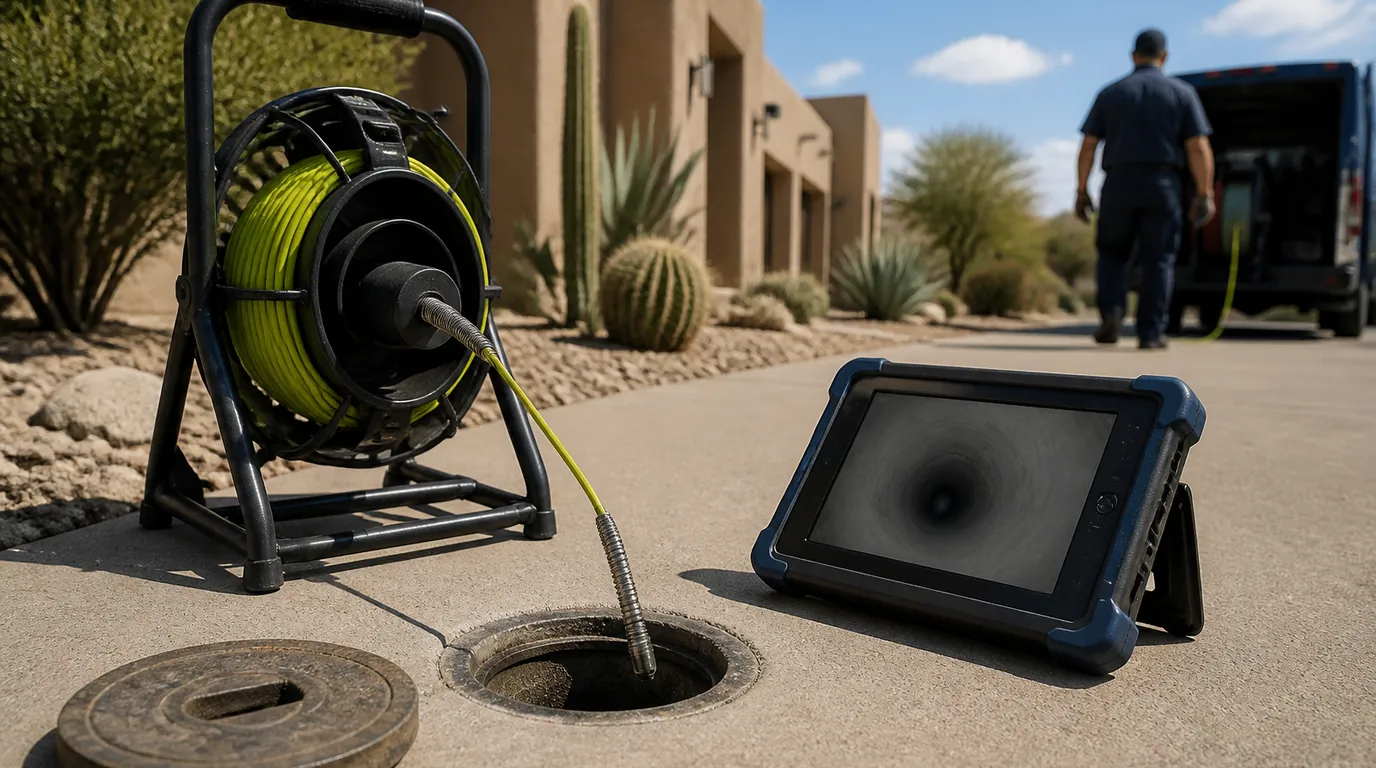
The camera travels through the line, usually from a cleanout. It shows cracks, offset joints, sags that hold water, roots and blockages. A locator can mark the position above ground.
Request the recording plus a written summary of what was found and where.
A camera cannot see through a line that is fully blocked. The plumber may need to clear it first. It also cannot tell you the pipe's ownership, which comes from the city.
Footage shows condition on the day. It does not predict future failures.
About six in ten Tempe homes are rented. Tenants and owners both benefit from a recorded look, since it settles whether the problem is use or the pipe.
Homebuyers in older parts of the city may want the line checked early in the process.
Pricing depends on access and the length of the run.
Ask whether you receive the video, and in what format.
Findings guide the next step: nothing, a cleaning, a spot repair or a replacement. Keep the footage for your records.
If you are buying, share the findings with your agent. They can inform repairs or price talks.
A camera with a locator marks the pipe's path on the surface and its depth. That helps when you do not know where the line runs or you plan to dig.
Buying a home? Ask the seller about past backups, then get the line scoped before closing. A recorded look is evidence either way.
A sewer camera finds cracks and blockages in drain pipe. A water supply leak is pressurized and needs listening, thermal or pressure methods instead. If you are not sure which line is the problem, the dispatcher can help sort it out.
A good report notes the length of line inspected, the pipe material, any cracks, offsets, sags, roots or buildup, and where each defect sits. A distance marker from the cleanout lets a contractor find the exact point later.
Ask for the video file and a plain-language summary. If the report is vague, ask the contractor to mark the defects on a simple sketch of the property. A clear record helps you compare quotes and gives a buyer or seller something to rely on.
Repair a sewer pipe that has cracked, filled with roots or sagged, whether the fix is a patch or a longer stretch.
Lay a new sewer lateral from the building out to the connection once patching would no longer hold.
Blast the inside of a drain with pressurized water to strip off grease film, mineral crust and hair-fine roots.
It helps a lot. Without one, the plumber may go in through a toilet or roof vent, which takes longer.
Ask for it. Many contractors provide it, and it is useful for repairs and sales.
It can show cracks and breaks in a drain line. For pressurized water lines, leak detection is a different method.
Often under an hour for an ordinary line, and longer if the line must be cleared first.
Ask on the call. Inspections are usually booked in daytime, but a backup needing a quick look can be reported at any hour.
Price depends on access and line length, and the dispatcher provides a clear quote before work starts.
It can show cracks and breaks inside the pipe. Whether water is actually escaping may need a second test.
Ask for it before the visit. Many contractors provide it.
Figures and statements on this page that come from outside references are listed here.
Ring the dispatcher and ask about a camera inspection, and a local contractor will be lined up.
Service area centered on Tempe and nearby Maricopa County cities.