Sewer Camera Inspection
Watch live video from inside the sewer pipe when deciding on a fix, a listing or a purchase.
When a sewer line has failed in several places or a camera shows a collapse, replacing it can be more sensible than repeated repairs. This page explains how replacement works and what to ask.
Tell the dispatcher what the camera showed, and a contractor is lined up.
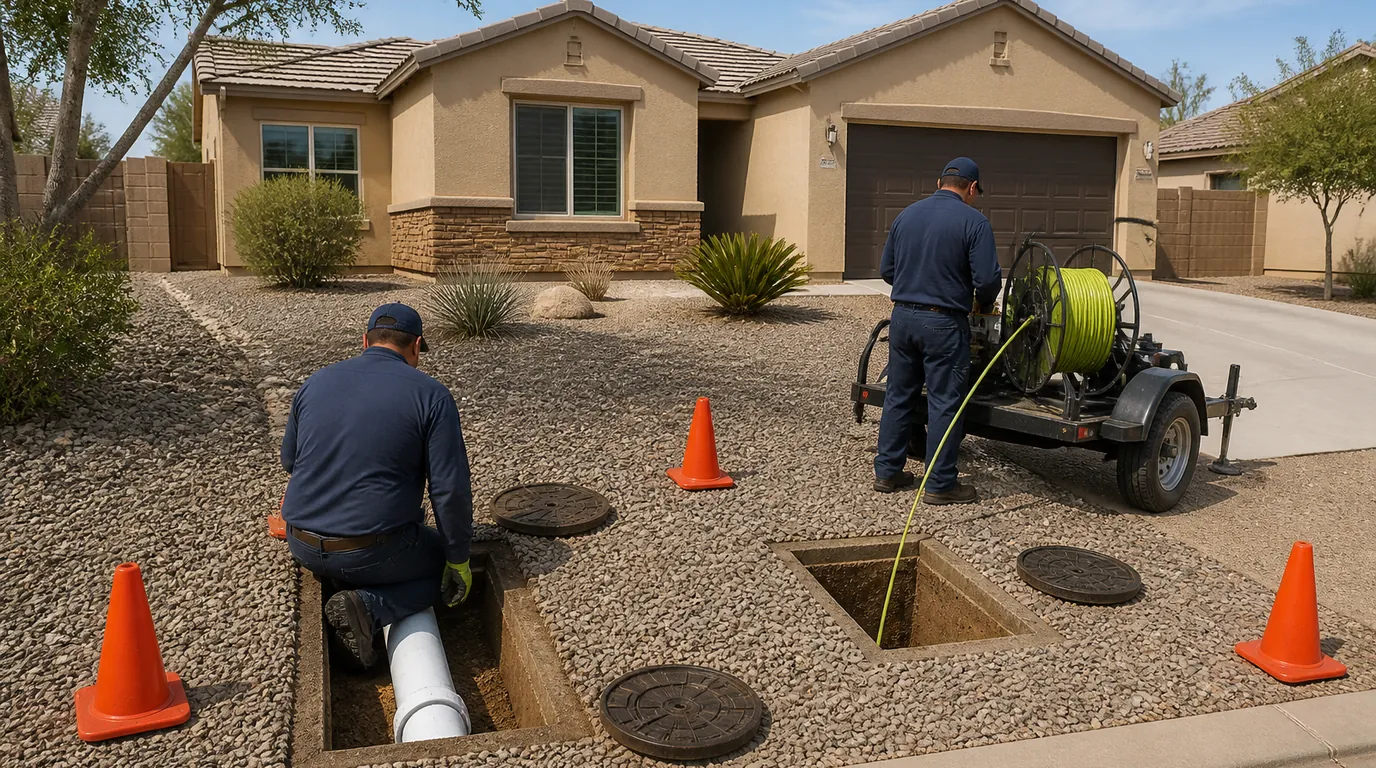
A single crack can be patched. A pipe that has failed in many places, or has lost its shape, rarely holds a patch. Replacement then costs less over time.
Have the contractor show the video and mark each defect on a simple drawing.
Open-trench work swaps the pipe along its whole path and lets the crew correct the slope. Trenchless options such as pipe bursting or lining disturb less ground but only suit certain pipes and soils.
Both methods are valid. Ask which one the contractor recommends for your lot, and why.
This is one of the bigger plumbing projects, and its scope sets the price.
Get the scope in writing, including who repairs landscaping and paving afterward.
Tempe lots range from compact single-family parcels to large apartment sites, and access shapes the plan. Driveways, patios and fences all affect the route.
If you rent, the owner decides on replacement. Share the camera findings in writing.
Sewer work often needs a permit and an inspection. Confirm who pulls the permit and what the inspection covers.
Confirm the license with the Arizona Registrar of Contractors before you sign.
Trenchless replacement drags a new pipe through the old path or lines it from inside. It disturbs less yard, driveway or patio. It needs an open, continuous pipe, so the camera look decides whether it suits your line.
Lining suits a pipe that is sound in shape but cracked or leaky at joints. It does not fix a sag or collapse. Replacement does. Ask the contractor to show the footage that supports their recommendation.
The lateral connects the house to the city main. Ask the City of Tempe where its section stops and yours starts. That boundary varies and determines who obtains the permit.
Old lateral material may be failing along its full length. A thoughtful contractor measures, marks and shows each defect, then prices the whole run against partial repairs.
Expect noise, digging and a period without sewer service. Ask how long fixtures will be out of use and whether a temporary arrangement is possible. Move vehicles, patio furniture and landscaping that sits near the route.
Ask how the contractor will protect the property, mark utilities and restore the surface. A written plan with dates, access needs and who inspects the work reduces surprises.
Watch live video from inside the sewer pipe when deciding on a fix, a listing or a purchase.
Repair a sewer pipe that has cracked, filled with roots or sagged, whether the fix is a patch or a longer stretch.
Blast the inside of a drain with pressurized water to strip off grease film, mineral crust and hair-fine roots.
It depends on the length and method. Ask for a schedule and how long the toilets will be out of use.
Usually water is off or unusable for part of the day. Ask the contractor how they handle it.
Yes. Footage shows whether replacement is justified and where to dig.
Usually a plan, a fee and an inspection. The contractor typically handles it.
Yes. The replacement itself is scheduled work, but a line backing up right now can be reported at any hour and the dispatcher arranges the first visit.
Cost follows the pipe length, depth, method and surface restoration. A clear quote comes from the dispatcher before work begins.
Sometimes. Pipe bursting and lining need small access pits, but they suit only certain conditions.
A camera shows collapse, heavy sag or damage in many places. One crack alone is usually a spot repair.
Figures and statements on this page that come from outside references are listed here.
Call the 24/7 line and ask about options for your lot. A dispatcher lines up a local contractor.
Service area centered on Tempe and nearby Maricopa County cities.