Drain Cleaning & Unclogging
Unblock sinks, tubs, washer standpipes and the main drain, and find out what keeps bringing the clog back.
Those soft, hairy flies circling a bathroom sink or floor drain almost always hatch inside the pipe. Killing adults accomplishes little while the slime they feed on remains.
By the Tempe Express Plumbing team ·
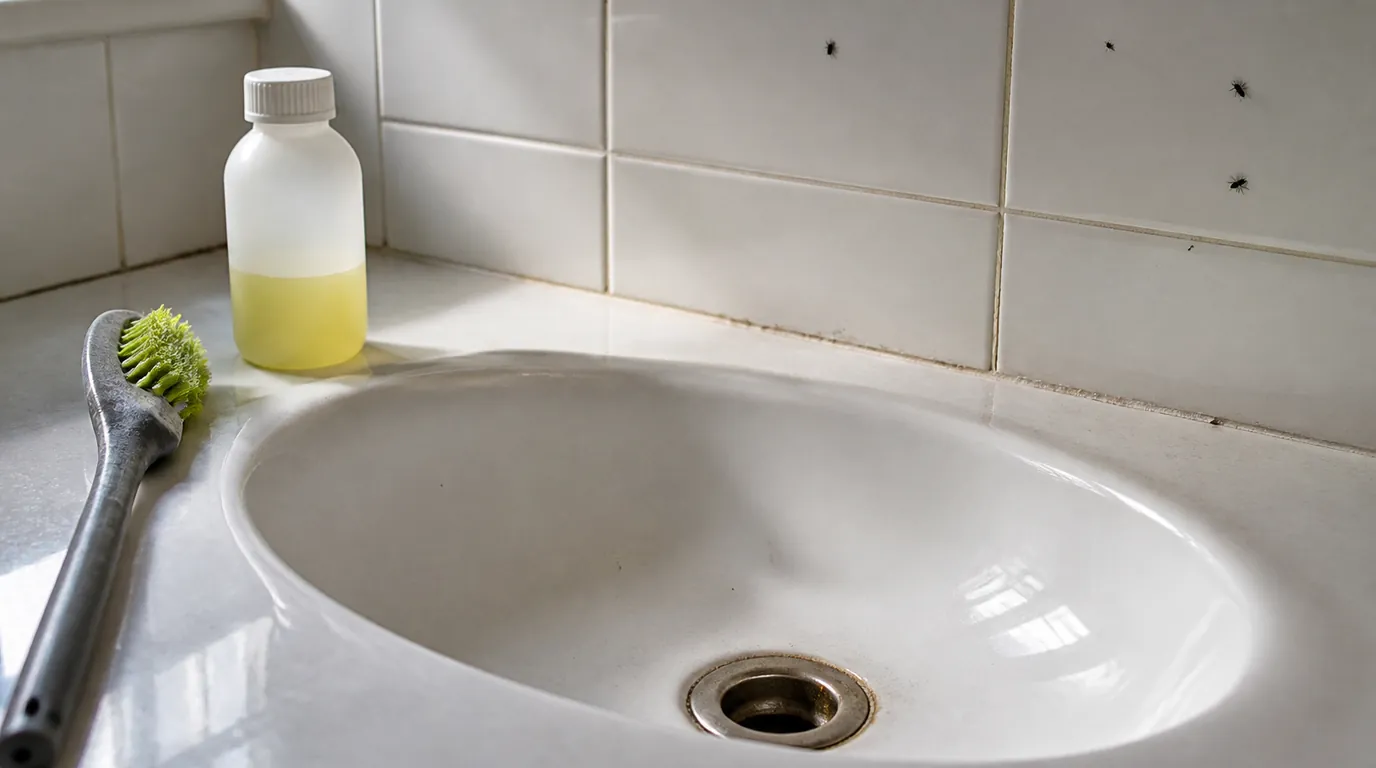
Also called moth flies, these insects are small, gray or tan and covered in fine hair. They perch on bathroom walls and travel in short awkward hops. They do not bite, and finding them does not mean the house is dirty.
They mean a drain has a layer of organic film. That film is the food and the nursery for their larvae, so the flies keep coming back until it is removed.
Rental-heavy housing means plenty of bathrooms and floor drains that sit unused for weeks. Roughly six in ten Tempe homes are rented, and a unit that is empty between tenants is an ideal setting for a dry trap.
Warm weather speeds the flies' life cycle. A drain film that would take weeks to bloom in cool climates can be teeming in days when the bathroom stays warm.
At dusk, stick a piece of clear tape across the drain opening, adhesive side down. Look at it in the morning. Any flies caught on the tape came out of that drain.
Another method is an upturned cup with petroleum jelly around its rim placed over the drain, which traps emerging adults. Test every suspect drain on its own, because several can be infested.
Bleach poured into a drain runs through in seconds. It does not scrub the film from the upper pipe wall, where larvae cling just under the drain flange.
Enzyme products work over hours by breaking down organic gunk. Pour one in at bedtime while the drain is idle and keep water out of it overnight.
Use a stiff brush on the drain opening and the first few inches of pipe. Then flush with hot water. Repeat for several days, since eggs may hatch after the first cleaning.
Floor drains and guest-bath sinks lose their trap water to evaporation. Pour a quart of water into each unused drain weekly, and add a spoonful of cooking oil to slow evaporation in drains that rarely see use.
If flies persist after cleaning, the source may be deeper: a slow main line, a cracked pipe or a broken trap seal. A sewer smell along with the flies is a further hint.
A plumber can pull a cable through to scrape the pipe or use a jetter to wash the full wall. A camera shows whether the pipe has cracked or sunk.
Three small flies are easy to mix up. Notice where they hang out.
| Fly | Look | Where it gathers | What helps |
|---|---|---|---|
| Drain fly | Fuzzy, gray, moth-like wings | Sinks, showers and floor drains | Scrub the film and flush the drain |
| Fruit fly | Tan with red eyes | Ripe fruit, trash and open drinks | Remove food and wash the bin |
| Fungus gnat | Slim, dark, weak flier | Overwatered houseplants | Let the soil dry out |
Fruit flies are tan, red-eyed and drawn to ripe produce and garbage. Fungus gnats are thin and dark and hang around soggy houseplants. Drain flies are fuzzy and park on walls close to drains.
Treating the wrong insect wastes time, so match the fly to its location before reaching for a spray.
Rinse sink drains with hot water after greasy dishes. Clean shower drain strainers weekly, and brush the underside of the stopper. Run water in unused drains regularly.
Regular drain cleaning on a stubborn line keeps film from rebuilding. Ask the contractor what keeps your drains clear between visits.
Drain flies need a thin layer of organic slime to lay eggs in. Remove that layer on a schedule and the cycle breaks. A good routine takes about five minutes per bathroom and needs nothing more than a bottle brush and a kettle.
Once a week, pull the stopper or strainer and wipe the underside. Scrub the first few inches of the pipe with the brush, rinse, then pour a kettle of hot, not boiling, water down the drain. Boiling water can soften older PVC joints, so let it sit for a minute first.
Pay extra attention to the overflow hole near the top of a bathroom sink. Few people clean it, yet it is a hidden channel where film builds up and larvae thrive. A pipe cleaner or a narrow brush reaches it. Rinse with a cup of warm water afterward.
Guest bathrooms, basement floor drains and laundry standpipes are the usual breeding spots in houses and rentals. Water sits in the trap for weeks, the surface dries into a crust, and flies move in. Running a gallon of water through each one every couple of weeks is enough to keep the trap sealed.
Floor drains in garages and utility rooms need the same attention. If a drain smells even after cleaning, the trap may have dried out completely or the drain may not have a trap at all. A plumber can add a trap primer, a small device that tops up the water seal automatically, so the problem does not return.
In a vacant unit, the landlord or property manager can ask a tenant or caretaker to flush every fixture during a walkthrough. Empty rentals turn over often in a university city, and a quick flush before each move-in saves a complaint later.
Most drain fly cases never need a plumber. If scrubbing and enzyme treatments fail after two weeks, or the flies show up at several drains at once, the cause may be deeper. A slow main line, a cracked pipe under the slab or a failed vent can all hold the moist, rotting material flies depend on.
A contractor typically starts with a cable or a jetting pass to clear the line, then runs a camera to look for sagging, cracks and root intrusion. You can read more about how that works on the sewer camera inspection page. Ask for the video and a short written note describing where any defect sits.
They develop in the slimy coating inside drains, traps and overflow channels. A dried-out trap or a fixture nobody uses is a typical starting place.
Occasionally. If scrubbing fails, or a sewer odor accompanies them, a camera can check the line.
They can carry bacteria from drains, but they are mainly a nuisance. Cleaning the source is the cure.
Adults live a couple of weeks. Expect them to fade within one to two weeks if the source is truly gone.
Unblock sinks, tubs, washer standpipes and the main drain, and find out what keeps bringing the clog back.
Blast the inside of a drain with pressurized water to strip off grease film, mineral crust and hair-fine roots.
Watch live video from inside the sewer pipe when deciding on a fix, a listing or a purchase.
Sewer odor can come from a dry trap, a bad wax ring or a damaged line. Match where it smells to what it means.
When the handle does nothing or the bowl barely moves, a short list of causes explains it. Start with the free checks.
Fine roots enter hairline cracks and thicken into a plug. See the warning signs, the clearing options and ways to slow regrowth.
Figures and statements on this page that come from outside references are listed here.
Call the 24/7 line and describe where they gather. A dispatcher lines up a local contractor.
Service area centered on Tempe and nearby Maricopa County cities.