Pool Leak Detection & Repair
Separate real pool water loss from evaporation, then locate the failing line, valve or fitting.
In a Valley summer, a pool can drop an inch or more in a few days from evaporation alone. The bucket test shows whether your pool is losing more than the sun explains.
By the Tempe Express Plumbing team ·
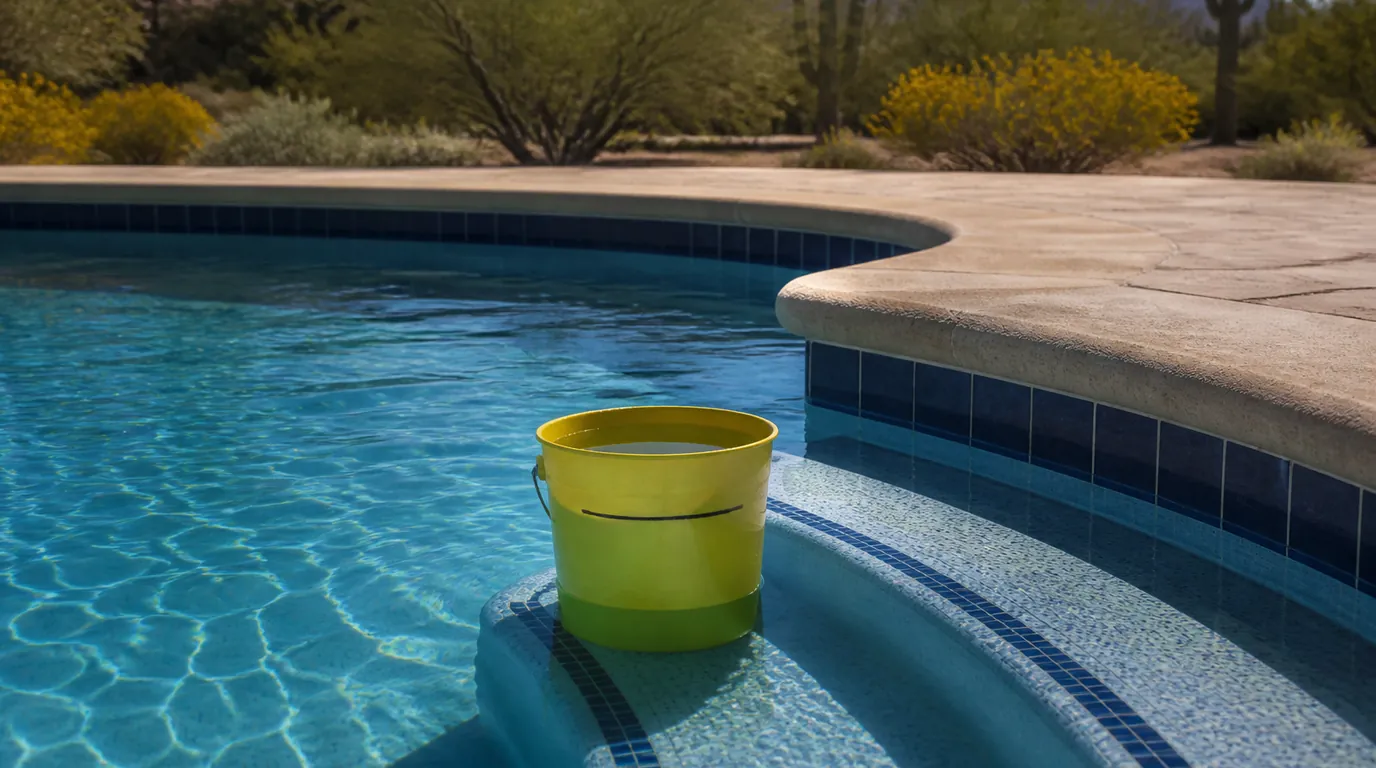
A pool leak and normal evaporation both lower the water level, so you cannot tell them apart by looking. The test compares the pool against a bucket exposed to the same sun and wind.
When the pool level falls faster than the bucket level, water is leaving through the shell, the pipes or the equipment. The test is free and can save a needless service visit.
A plain five-gallon bucket, a marker or tape, and a few hours before you start. Turn off any automatic fill so it does not top up the pool during the test. Note whether the pump runs on a timer.
Pick a day without heavy wind or rain. A monsoon storm in July or August will spoil the reading, so wait for a calm stretch.
Fill a bucket with pool water until it is an inch short of the rim. Rest it on the second step so the water inside sits near the pool's own level.
Scratch a line at the bucket's water level and tape a mark at the pool's level on the outside. Let everything sit for a full day with the pump on its usual schedule, then measure each drop.
Equal drops mean evaporation is the whole story. A pool that lost a quarter inch or more than the bucket probably has a leak.
Run it again for a day with the pump switched off. If the extra loss slows or stops, suspect the pressurized plumbing, such as return lines or fittings at the equipment pad.
After a day, compare the two levels and find your case below.
| Result | What it suggests | Next step |
|---|---|---|
| Both levels fell equally | Evaporation only | Retest the next day |
| Pool fell at least a quarter inch farther | Leak probable | Repeat with the pump off |
| Extra loss halts when pump is off | Leak on the pressurized side | Have the lines pressure tested |
Skimmer joints, return fittings, valves at the equipment pad and buried lines are the usual suspects. A crack in the shell is less common than a plumbing fault.
Look for damp soil at the pad, a pump that struggles to hold prime, or air bubbles at the returns. Those clues narrow the search before anyone digs.
A contractor can cap individual lines and watch a gauge, which shows which line is losing water without tearing up the deck.
Pool leak detection and repair covers locating the leak and fixing the pipe, valve or fitting. For spa plumbing, there is a separate spa page.
Two mistakes spoil most tests. One is an autofill valve topping the pool up mid-test. The other is leaving the bucket on the deck, where sun and heat differ from the water.
A third is skipping the pump-off test, which is what separates a shell leak from a pressure-side one.
If the pool bill seems high, check the household meter too. A leak in the house line can look like pool loss when an autofill is hiding it. See leak detection for how to test the house side.
Keep a log of daily levels for a week. Patterns tell more than a single reading.
A pool in the Phoenix area can lose a surprising amount of water to evaporation alone. Hot, dry air, wind across the surface and long sun hours all speed it up. Splashing, backwashing the filter and heavy swimmer use take a share as well, so a small daily drop does not prove a leak.
That is why the bucket test compares the pool against a container exposed to the same conditions. The bucket loses water only to evaporation, so any extra loss in the pool is water going somewhere else. The test is a screen, not a diagnosis, and it works best when the weather stays steady during the day you run it.
Sometimes the numbers do not fit the table. If the pool dropped less than the bucket, the bucket was probably in a spot with more sun or wind, or the pool received water from rain, an autofill valve or a hose. Set the test up again and keep the bucket on the second step, in the shade line if possible.
If the loss is large the first day and small the next, the leak may sit at a certain water level, such as the skimmer opening or a light niche. The pool stops leaking once the level falls below the crack. Note where the waterline sits after a few days with no refilling, because that height narrows the search.
If the loss stays the same with the pump on and off, the leak is probably in the shell, a fitting at the wall or a pipe on the suction side. If it drops only while the pump runs, pressure-side plumbing becomes the main suspect.
Look at the deck and the equipment pad as well as the water. Soft or sunken spots in the soil next to the pool, wet ground near the pump, cracks in the deck, or tiles that are loose all suggest water is escaping. Algae that keeps returning after a proper chemical balance can also hint at fresh water entering the system.
A pump that loses prime, air bubbles in the return jets, or a filter gauge that swings up and down can mean air is entering through a leak on the suction side. These clues are worth writing down before you call.
If the bucket test shows a leak, the next step is a professional search. Pool leaks are found with pressure tests on isolated lines, dye on suspect cracks and listening gear. The pool leak detection page explains what each visit includes and what changes the price.
It varies with sun, wind and humidity. Summer loss can be an inch or more over several days, which is why the bucket test matters.
Yes, during the test. A working autofill hides the loss and ruins the comparison.
That means evaporation. Repeat on a second day, and keep watching for a change.
A pool or plumbing contractor pressure tests the lines. Ask the dispatcher which contractor handles pool plumbing.
Separate real pool water loss from evaporation, then locate the failing line, valve or fitting.
Pinpoint hidden water loss behind drywall, under flooring or along the pipe buried in the yard.
Service spa plumbing, chase drips at the equipment pack, and extend supply or drain runs.
Read the meter, dye the toilet tanks and work through a few easy checks to narrow down where water is escaping.
Eight ordinary reasons a Tempe water bill climbs, plus how to separate a leak from heavy use.
Certain Tempe properties must keep a backflow assembly and have it tested each year. Here is the city's stance.
Call the 24/7 line and share your bucket test result. A dispatcher lines up a local contractor.
Service area centered on Tempe and nearby Maricopa County cities.