Pool Leak Detection & Repair
Separate real pool water loss from evaporation, then locate the failing line, valve or fitting.
A spa has more plumbing than most people notice. Pumps, jets, heater connections and drain lines can all fail. This page covers the plumbing side, from a drip at a union to a supply line that needs replacing.
Tell the dispatcher what the spa is doing, and a contractor is lined up.
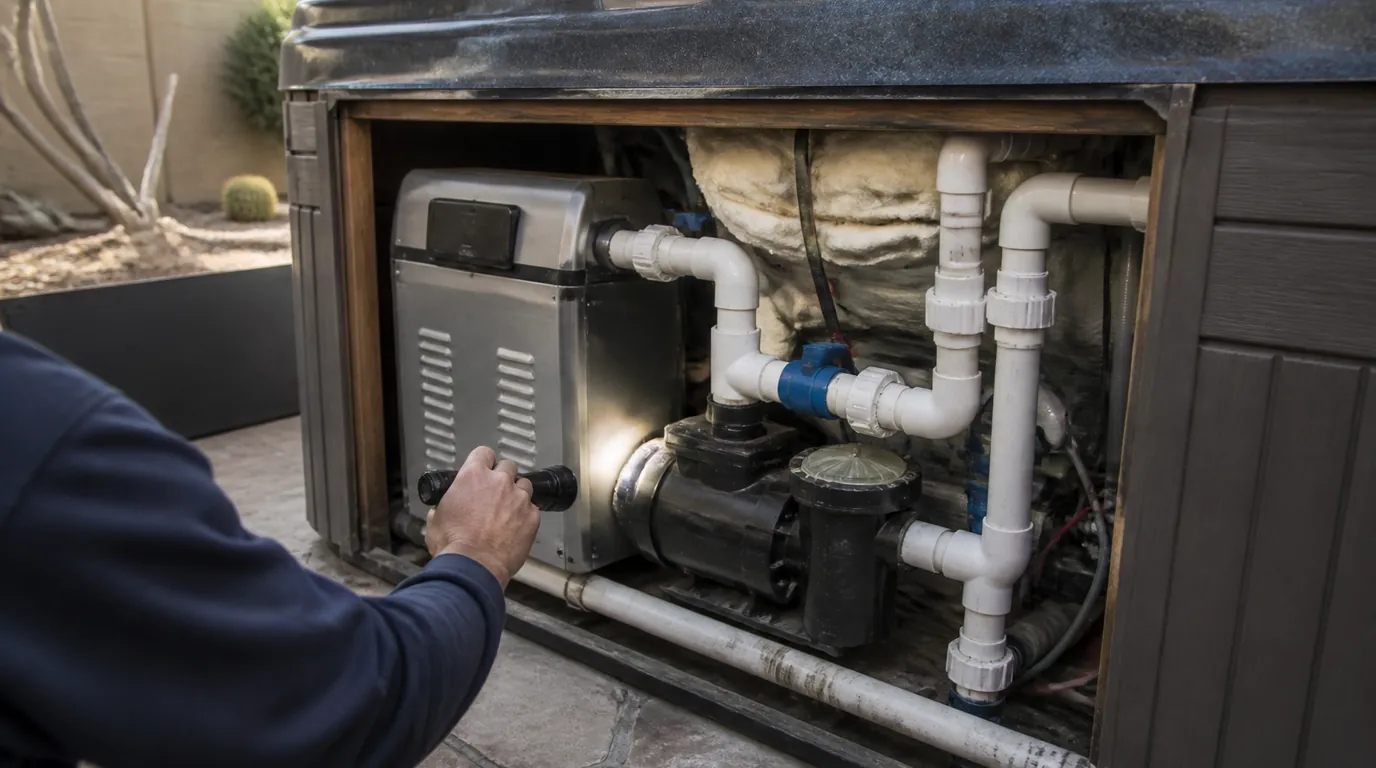
Most spa leaks start at unions, pump seals, heater fittings and jet fittings. These parts flex with heat and vibration, so seals wear.
Hidden leaks may sit under the cabinet or in buried lines to an in-ground spa. A pressure test narrows down which section is leaking.
A spa needs a water supply for filling and a drain for emptying. Plumbers can run or replace those lines, install shutoff valves and connect the equipment pad.
Electrical and gas work for a spa is handled by licensed trades for those systems. A plumber coordinates the water side.
Pricing follows the part and the access.
Ask the contractor to quote parts and labor separately.
Valley spas face heat, sun and mineral-rich water. Scale builds on heaters and jets, and sun bakes plastic fittings and hoses.
Drain a spa carefully. Local rules and your neighbors both care where the water goes.
Before a spa goes in, decide where the drain will run and how the supply will connect. Poor planning leads to awkward access later.
If you are remodeling, ask the contractor to check the old lines before the new spa is connected.
A spa that was moved, remodeled or refitted can leak at the new connections. Check the unions, the heater fittings and the drain valve first. A drip that appears only when the jets run points to the pump side.
Hot water evaporates faster than cool. A dropping level in a hot tub is not always a leak, but a puddle on the ground or damp cabinet floor is a clear sign. Mark the level, turn the jets off and compare the next day.
A spa holds hundreds of gallons, and where it drains matters. Do not send water to a storm drain or a neighbor's property. Many cities have rules about chlorinated or salty water, so check with the City of Tempe before you drain, and consider letting chemicals dissipate first.
Turn off the power at the breaker before you drain or open the equipment bay. When refilling, check the pack for leaks at unions and fittings as the water rises. Run the pumps only after the equipment is covered with water.
Separate real pool water loss from evaporation, then locate the failing line, valve or fitting.
Pinpoint hidden water loss behind drywall, under flooring or along the pipe buried in the yard.
Fix or renew the supply pipe running from the street meter to your home's main shutoff.
Evaporation is common in hot weather, but a faster drop may mean a leak at the pack, a jet or a buried line. A pressure test confirms it.
Yes, the plumbing side can be installed. Electrical work is done by an electrician.
A clogged filter, an air lock or a failing pump can cause it. A plumber checks the lines and the equipment.
Often. A new seal or union fixes many drips, though a worn fitting may need replacing.
The line is answered around the clock. Switch off the spa heater and pump at the breaker if water is pooling at the pad, then call.
Yes. The contractor checks the pack, the unions and the lines, and pressure tests suspect sections.
Yes, the plumbing side. Electrical work is done by an electrician.
Pricing depends on the part and the access. The dispatcher gives a clear quote before work begins.
Call the 24/7 line and describe the problem. A dispatcher lines up a local contractor.
Service area centered on Tempe and nearby Maricopa County cities.