Leak Detection
Pinpoint hidden water loss behind drywall, under flooring or along the pipe buried in the yard.
In a Valley summer, pools lose a lot of water to evaporation. A real leak loses more. Sorting one from the other saves money, and finding the source saves the pool.
Say how quickly the level falls and a contractor is assigned.
Try a bucket test. Fill a bucket to the pool's level, rest it on a step and mark both waterlines. After a day compare the drops; if the pool fell further than the bucket, a leak is probable.
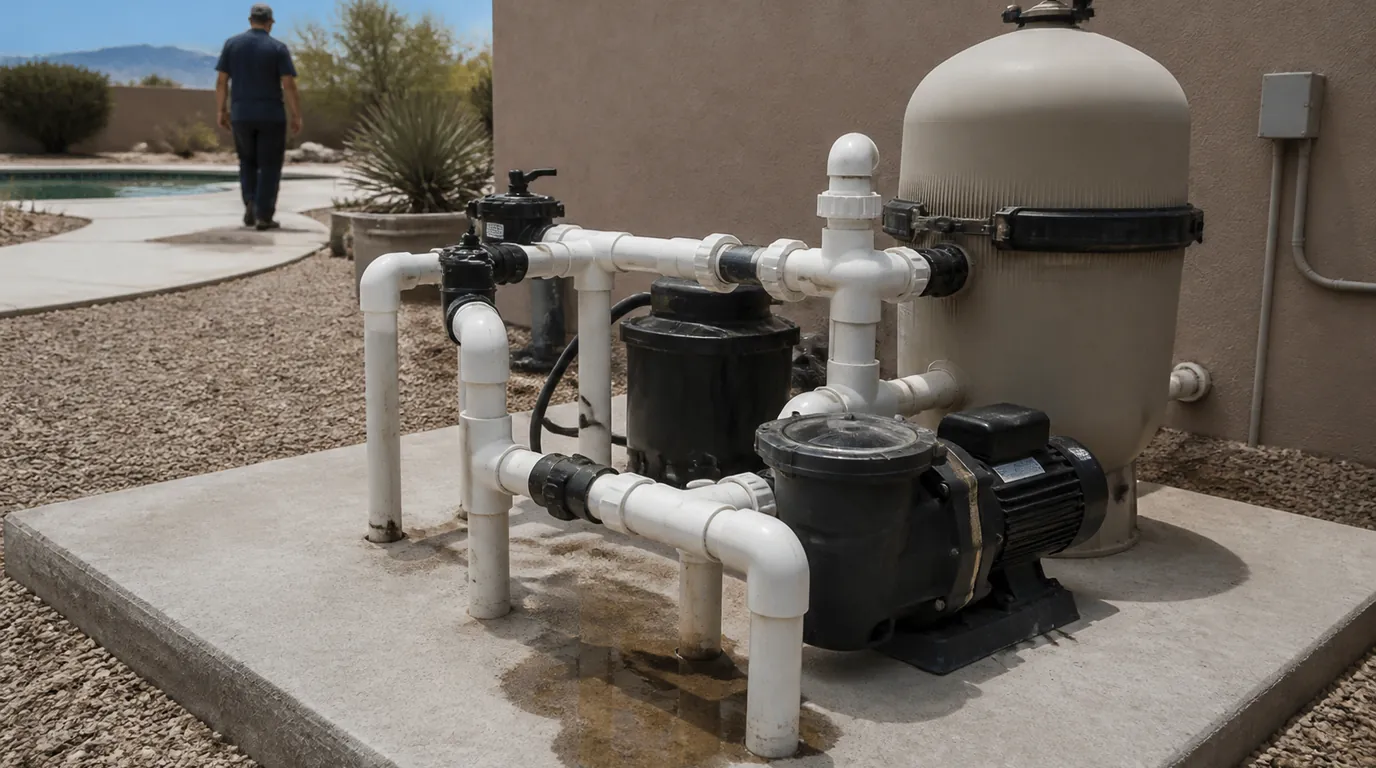
Repeat the test with the pump off. If the loss eases or stops, the leak sits on the pressurized side, such as return lines or valves at the pad.
Common sources are skimmer joints, return fittings, equipment pad plumbing and buried lines. The shell itself can crack, but plumbing leaks are more common.
A contractor can pressure test individual lines to isolate which one is losing water. That avoids digging up lines that are fine.
With July highs near 106 degrees and only about nine inches of rain a year, pools in Tempe lose a lot of water to the sky. Expect to top up regularly even without a leak.
A high water bill can come from a pool leak. If the household meter climbs with no other cause, check the pool as well.
Price depends on how many tests are needed and where the leak sits.
Ask whether the diagnosis fee applies to the repair if the same contractor does both.
Repairs range from replacing a fitting at the pad to repairing a buried line. Buried line repairs involve digging, which affects decking and landscaping.
After the repair, monitor the water level for a week. If the drop continues, a second leak may exist.
A pool with a quiet leak and a spa with a worn seal can look the same from the deck. Check the equipment pad for damp soil, drips at unions and a pump that struggles to hold prime. Plumbing on the pressure side leaks only while the pump runs.
Note how many inches the level drops each day, whether the drop slows when the pump is off, and whether the auto-fill is running. Those answers help the dispatcher choose the right contractor.
Yes. An auto-fill keeps topping up the pool, which hides the loss until the bill arrives. If the bill rises and the house meter test is clean, the pool is a prime suspect. The leak detection page covers the house side.
Pinpoint hidden water loss behind drywall, under flooring or along the pipe buried in the yard.
Service spa plumbing, chase drips at the equipment pack, and extend supply or drain runs.
Fix or renew the supply pipe running from the street meter to your home's main shutoff.
Run the bucket test for a day and compare the pool and bucket. A bigger loss in the pool suggests a leak.
Run it as the contractor advises. Letting the level fall below the skimmer can damage the pump.
Yes, usually by locating the leak and digging to that point. Ask about decking and landscaping repair.
The materials and pressures differ. Choose a contractor who works on pool plumbing, and ask about it on the call.
Yes, the line never closes. A pool dropping fast, or a soaked equipment pad, should be reported right away, while routine tests can wait for a weekday.
Yes. A contractor tests the lines and the equipment pad to isolate the leak, then quotes the repair.
Pricing depends on the number of lines and tests. The dispatcher gives a clear quote before work starts.
Turn the auto-fill off for the bucket test, and watch the level for a day or two.
Figures and statements on this page that come from outside references are listed here.
Call the 24/7 line and describe the loss rate. The dispatcher lines up a local contractor.
Service area centered on Tempe and nearby Maricopa County cities.