Toilet Repair & Installation
Fix a toilet that keeps running, weeps around the base or clogs, or install a different one.
A toilet that hisses or tops itself up unprompted is passing water from tank to bowl. Nearly every case comes down to a tired flapper, a badly set fill valve or a chain that is off.
By the Tempe Express Plumbing team ·
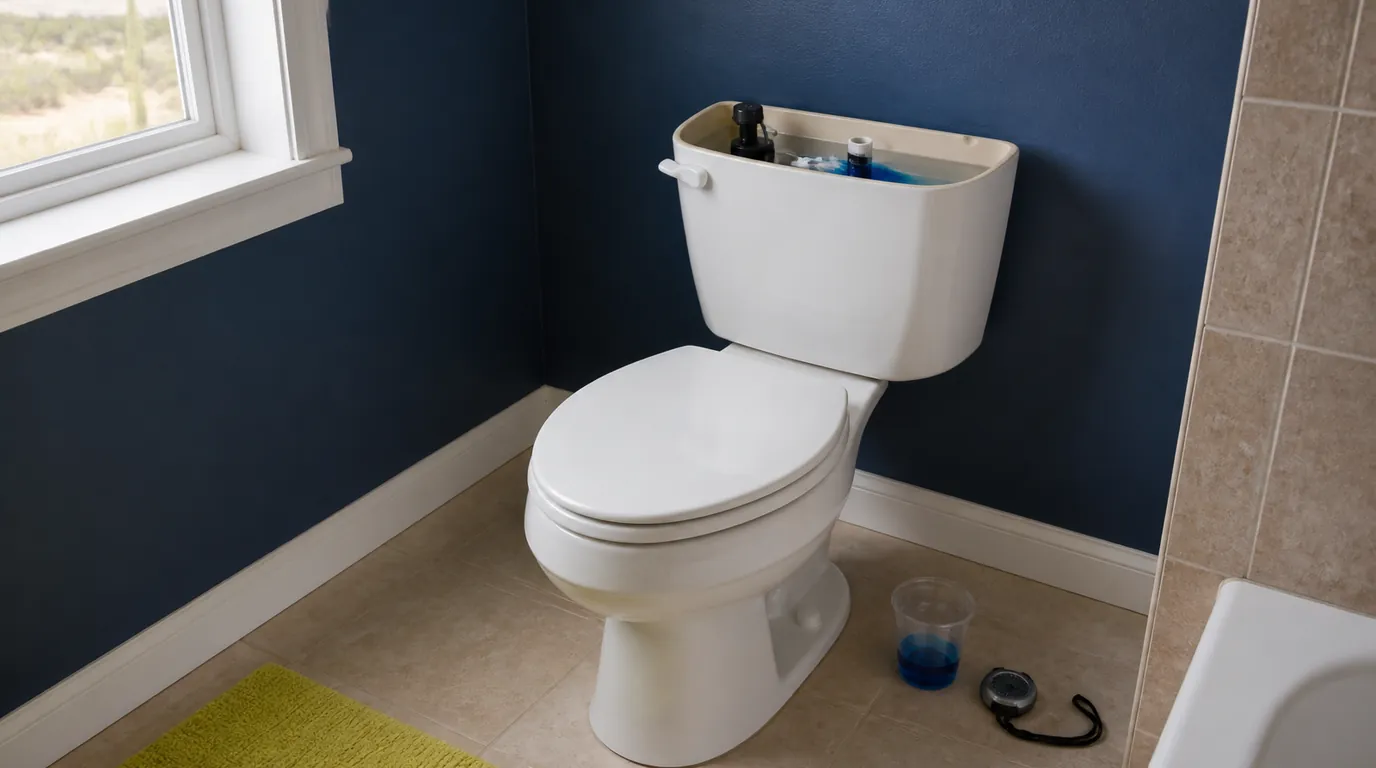
Water slips past a bad seal all day, and the meter keeps counting. A single toilet can waste hundreds of gallons a month, and you may not hear it.
In a rental, that waste may land on a shared bill. Report it early.
Put several drops of food coloring into the tank and do not flush. Wait a quarter hour. Colored water in the bowl proves the flapper is seeping.
A clear bowl with a tank that keeps refilling points to the fill valve or the overflow tube.
The flapper is the rubber stopper at the tank floor. Over time it warps, stiffens or gathers mineral crust. Wipe it first; if it feels mushy, curled or split, replace it.
Buy one that matches your flush valve. A mismatched flapper may not seal.
Water that keeps spilling into the overflow tube means the float is set too high or the fill valve is worn. Lower the float until the level stops roughly an inch under the tube.
If adjusting does not help, replace the fill valve. It is a common, inexpensive fix.
Most fixes involve one of these.
| Part | Sign | Fix |
|---|---|---|
| Flapper | Dye reaches the bowl | Replace the flapper |
| Fill valve | Water runs into the overflow tube | Adjust or replace |
| Chain | Flapper held slightly open | Adjust slack |
| Flush valve seat | Leak with a new flapper | Plumber replaces the valve |
A short chain props the flapper slightly open, while a long one can snag beneath it. Aim for a little slack.
Check that the chain is not snagging on anything.
Treated municipal water contains chlorine, and minerals deposit on parts. Rubber seals wear faster in some water. Expect to replace a flapper every few years.
The City of Tempe keeps a chlorine residual near 1 mg/L, which is normal for treated supply.
If toilets in two bathrooms run, check house water pressure. Very high pressure can wear parts early. A plumber can test it.
Replacing parts in all toilets at once saves return visits. See toilet repair.
If new parts do not solve it, the flush valve seat may be cracked or the tank may need replacing. A plumber can tell quickly.
Water at the base is a different problem. It may be a failed seal, and it needs prompt attention. Also see leak detection if your meter moves with every toilet fixed.
Most running toilet fixes need very little. A universal flapper, a new fill valve, a small adjustable wrench and a sponge cover almost every case. Take a photo of the tank internals and the toilet brand to the store so you buy parts that fit.
Turn off the supply valve before you start, flush to empty the tank and sponge out the last water. Work in good light, and set each old part aside until the new one is in and working.
Disconnect the supply line at the bottom of the tank. Loosen the large nut under the tank that holds the fill valve in place, lift the valve out and set the new one in at the height the instructions give. Hand-tighten the nut and reconnect the supply line.
Clip the refill tube to the overflow pipe and adjust the float so the water stops about an inch below the top of the overflow tube. Turn the water back on, let the tank fill and flush twice to check for leaks and a clean shutoff.
If a new flapper and fill valve still leave the toilet running, the flush valve seat may be pitted or cracked. The seat is the ring the flapper presses against, and a rough surface lets water seep through. A new flush valve kit can fix it, though some owners prefer to replace the toilet when the porcelain is old.
Persistent running can also come from water pressure that is too high, which pushes past a worn seal. A gauge on an outdoor faucet confirms it. If the repair is more than you want to take on, the toilet repair service page lists what a contractor checks.
A toilet that refills every so often with no one touching it is called a phantom flush. It means water is slowly leaking from the tank into the bowl, the water level in the tank drops, and the fill valve opens to top it up. The sound is a short burst of water every few minutes or hours.
The dye test confirms it, and the usual fix is a new flapper. If the flapper is fine, check the seat for mineral crust and wipe it with a cloth. Keep an eye on the water bill after the repair to see whether the loss has stopped.
In a rental, report the problem even if the toilet seems minor. A silent leak can add up on a shared bill, and managers prefer to fix it early.
After any repair, wait an hour without flushing, then add dye to the tank again and wait ten minutes. Clear water in the bowl confirms the seal. Read the meter before and after a quiet period, such as overnight, to catch any remaining loss.
If the toilet still runs, shut off the supply valve and call. Do not leave a running toilet unattended for days, since the water and money add up fast.
Hundreds of gallons a month is common. The loss is silent, which is why bills creep up.
Often not. A flapper or fill valve takes a few minutes and costs little.
Phantom flushing means a slow leak past the flapper. The tank drops, then refills.
Yes. Tell the dispatcher how many are running.
Fix a toilet that keeps running, weeps around the base or clogs, or install a different one.
Pinpoint hidden water loss behind drywall, under flooring or along the pipe buried in the yard.
Stop a faucet drip, bring back full flow, free a frozen shutoff or fix a leaking outdoor bib.
When the handle does nothing or the bowl barely moves, a short list of causes explains it. Start with the free checks.
Eight ordinary reasons a Tempe water bill climbs, plus how to separate a leak from heavy use.
Read the meter, dye the toilet tanks and work through a few easy checks to narrow down where water is escaping.
Figures and statements on this page that come from outside references are listed here.
Call the 24/7 line and describe it. A dispatcher lines up a local contractor.
Service area centered on Tempe and nearby Maricopa County cities.