Drain Cleaning & Unclogging
Unblock sinks, tubs, washer standpipes and the main drain, and find out what keeps bringing the clog back.
A toilet that keeps running burns through water, and a seeping base can soften the subfloor. Most trouble traces to a handful of cheap tank parts, though a few cases signal a deeper issue. A bowl that is rising or water at the base calls for the supply valve first, then the 24/7 line.
Explain what the toilet is doing and a contractor is assigned.
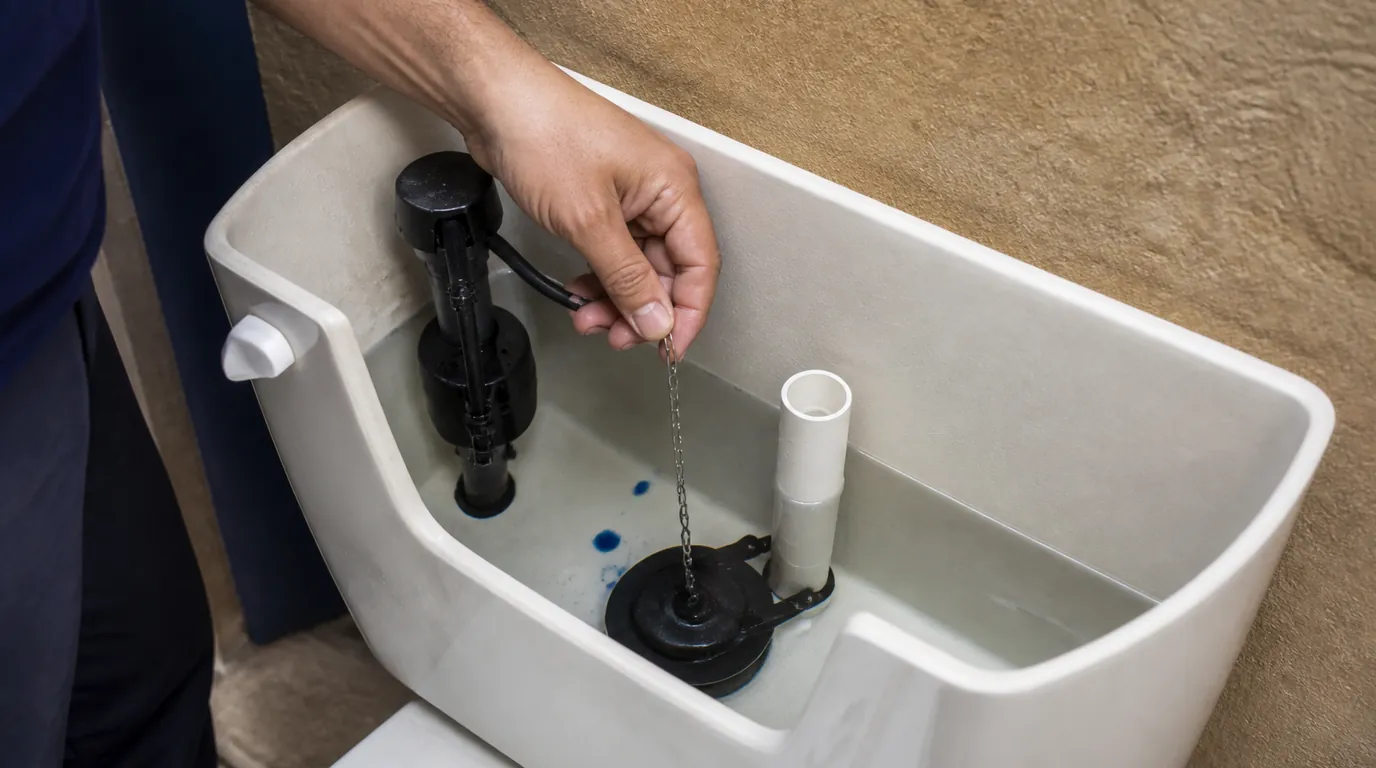
Take off the tank lid and observe. Water spilling down the overflow tube means the fill valve is set too high. Water creeping into the bowl past the rubber flapper means the flapper has worn out.
Put a few drops of food coloring in the tank and wait about ten minutes. Tinted water in the bowl exposes a flapper that is leaking.
A wet floor at the toilet foot may come from a spent wax ring, a loose bolt or a hairline crack in the bowl. A toilet that wobbles has usually lost its seal.
Do not ignore it. Water under a toilet soaks the subfloor and can damage the ceiling below.
Many Tempe homes are rentals, and toilet repairs are among the most common requests to managers. Report a running toilet early, since the water bill is shared or at stake.
Mineral and chlorine content in the supply wears flappers and seals in older toilets. Replacement parts are low in cost.
Pricing follows the part and the complexity.
Ask whether the quote includes the toilet, a wax ring and haul-away.
A plunger clears most bowl clogs. If the tub or sink gurgles when you flush, the clog is deeper in the drain line, and a drain page covers that.
Repeated clogs may mean a toilet with a weak flush or a drain problem further down.
A newer model often uses less water and ends a nagging problem. Measure from the finished wall to the closet bolts, known as the rough-in, to buy one that fits.
Installation includes setting the flange, a new wax ring and a supply line. Ask whether removal of the old unit is included.
A few symptoms show up again and again.
When toilets in two bathrooms run, the cause is often shared: water pressure that is too high, or worn parts from the same age. Replacing flappers and fill valves together is cheaper than coming back for each.
Water bills climb quietly with a running toilet. Ask the plumber to check the pressure at the main if multiple fixtures wear out together.
If plunging fails, an object may be lodged in the trap or the drain below may be blocked. When the toilet backs up while other drains gurgle, the blockage is in the pipe, not the bowl. Stop using water and phone.
Heated seats, bidet wands and one-piece units with odd handles use proprietary parts. Give the brand and model on the call so the contractor can bring the right ones. Older one-piece units can be costly to repair, and replacement may be the better value.
Unblock sinks, tubs, washer standpipes and the main drain, and find out what keeps bringing the clog back.
Stop a faucet drip, bring back full flow, free a frozen shutoff or fix a leaking outdoor bib.
Replace a shower pan, tub or valve and set the drain rough-in at the right height.
Most often a worn flapper or a faulty fill valve. Both parts cost little to replace.
A failed wax ring, a loose bolt or a crack. It needs attention before it damages the floor.
Ask on the call. Many contractors will, and some prefer to supply the unit.
Yes. Turn off the valve behind the toilet, then call.
Phone the dispatcher any hour. Shut the valve on the wall behind the toilet, lift the tank lid to stop the float if the bowl keeps filling, and tell the dispatcher whether other drains gurgle.
Pricing depends on the part and the fixture. The dispatcher gives a clear quote before work begins.
Pricing depends on the toilet and the floor condition. Ask whether removal and a new wax ring are in the quote.
Same-day visits are available. Close the valve behind the toilet first, then call.
Stop using water. If other drains gurgle, the line is blocked and a drain cleaning is needed.
Figures and statements on this page that come from outside references are listed here.
Close the supply valve and call the 24/7 line. A dispatcher lines up a local contractor.
Service area centered on Tempe and nearby Maricopa County cities.