Leak Detection
Pinpoint hidden water loss behind drywall, under flooring or along the pipe buried in the yard.
A shower or tub swap involves the valve, the drain and the surrounding walls. Correct plumbing outweighs the finish, since errors end up hidden behind tile.
Share what you have in mind and a contractor is assigned.
Settle if only the fixture is changing, or the valve and walls as well. A valve swap needs wall access. A new tub in the same footprint is simpler than moving the drain.
Measure the alcove, the drain location and the valve height before choosing a unit.
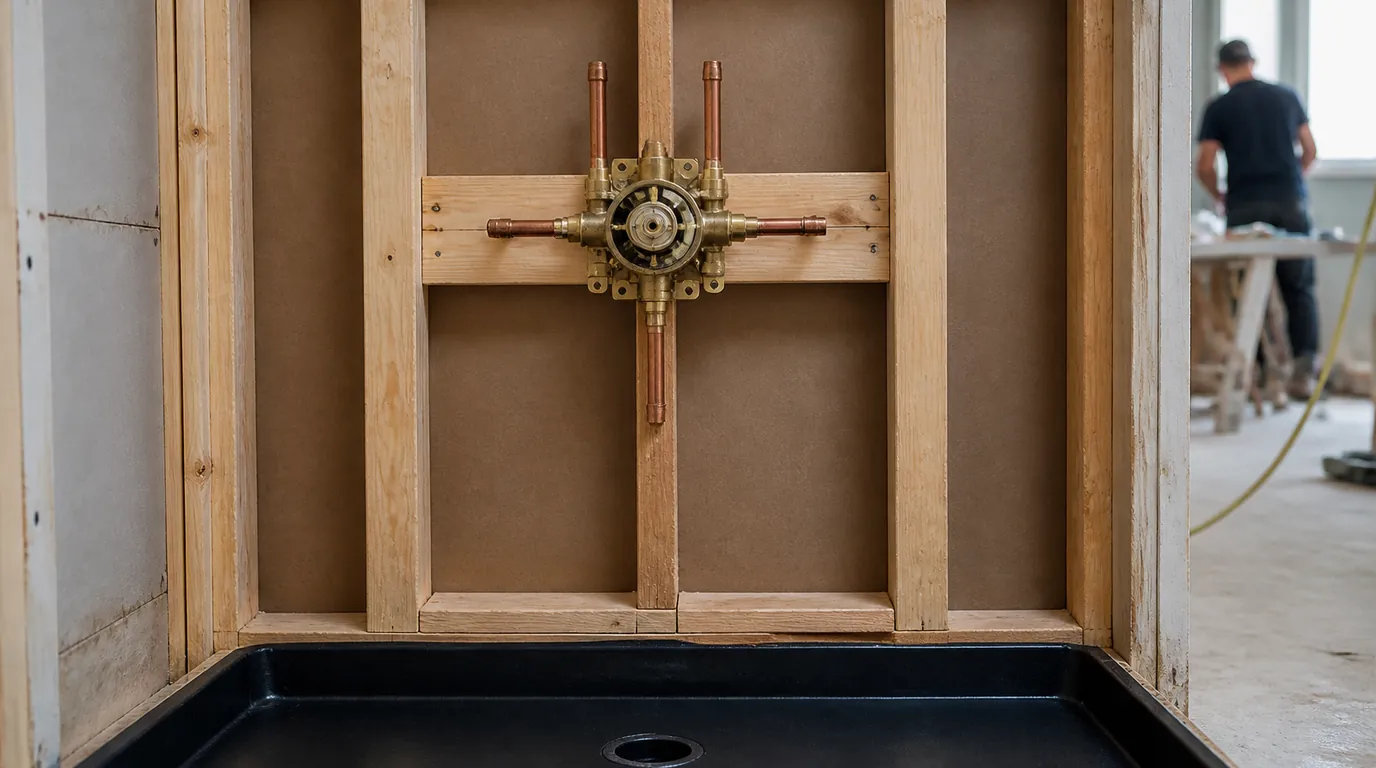
The valve controls temperature and flow. Replacing an old valve can fix leaks, dripping and poor mixing. The drain connects to a trap that blocks sewer gas.
Test the drain and valve for leaks before closing the wall. That avoids tearing out new tile.
Cost follows scope and surfaces.
Ask who handles tile and drywall, since that is often a different trade.
Bathrooms in homes built from 1970 to 1999 often have original valves and drains, now decades old. A remodel is the best time to replace them.
In multi-unit buildings, a leak from a shower can show up in the unit below. Tell the manager at once.
Water in the ceiling below, soft flooring near the tub or stains on a nearby wall suggest a shower leak. A cracked pan, a bad drain seal or a leaking valve is often the cause.
Find the source before tiling. The leak detection page explains how.
A shower valve that leaks at the handle or drips from the head wants a new cartridge or a valve body. A bathtub faucet that sprays sideways has a worn diverter. Repair is usually cheaper than a full replacement.
Water in the room below a bathroom is a sign of a shower or tub leak. Turn off the supply to the bathroom, photograph the stain and call. The cause might be a valve, a drain seal or a cracked pan.
Older homes sometimes have S-traps that can siphon dry and let sewer gas in. Replacing them with properly vented P-traps is a common remodel fix. Ask the plumber to check venting before you finish the walls.
Jetted tubs have pumps and lines of their own. Ask the dispatcher whether a contractor works on them, and give the brand.
A shower valve controls temperature and flow, and an anti-scald design helps prevent sudden changes when another fixture runs. Choose a valve that fits the trim you want, since trim kits are not always interchangeable between brands.
The drain sits at the lowest point of the pan, and it must connect to a trap and a vent. Waterproofing is just as important as the plumbing. A membrane behind tile and a flood test of the pan before tile goes in protect the walls and floor from long-term leaks.
Pinpoint hidden water loss behind drywall, under flooring or along the pipe buried in the yard.
Stop a faucet drip, bring back full flow, free a frozen shutoff or fix a leaking outdoor bib.
Add a bidet seat or freestanding bidet with the correct supply, stop valve and drain.
Yes. It requires access through the wall, often from behind or by opening the tile.
Stains, soft flooring or a rising water bill suggest it. A plumber can test the valve and drain.
Ask on the call. Some contractors install customer-supplied fixtures.
A tub swap is often a day. A full remodel with new valves takes longer.
Someone answers all night. For an active leak, close the supply or main valve and then call. Planned replacements are scheduled for daytime.
Pricing depends on the valve and the access. The dispatcher gives a clear quote before work begins.
Same-day visits are available. Close the supply to the bathroom and call.
Ask on the call and give the brand. Not every contractor services them.
Figures and statements on this page that come from outside references are listed here.
Phone the dispatcher to talk through the plumbing and a nearby contractor will be arranged.
Service area centered on Tempe and nearby Maricopa County cities.