Water Softener Installation & Repair
Put in a softener or get a stalled one cycling and making soft water again.
Filtration solves taste, odor and sediment, which differ from the hardness a softener treats. Choosing the right system starts with knowing what you want to remove.
Tell the dispatcher what you notice in the water, and a contractor is lined up.
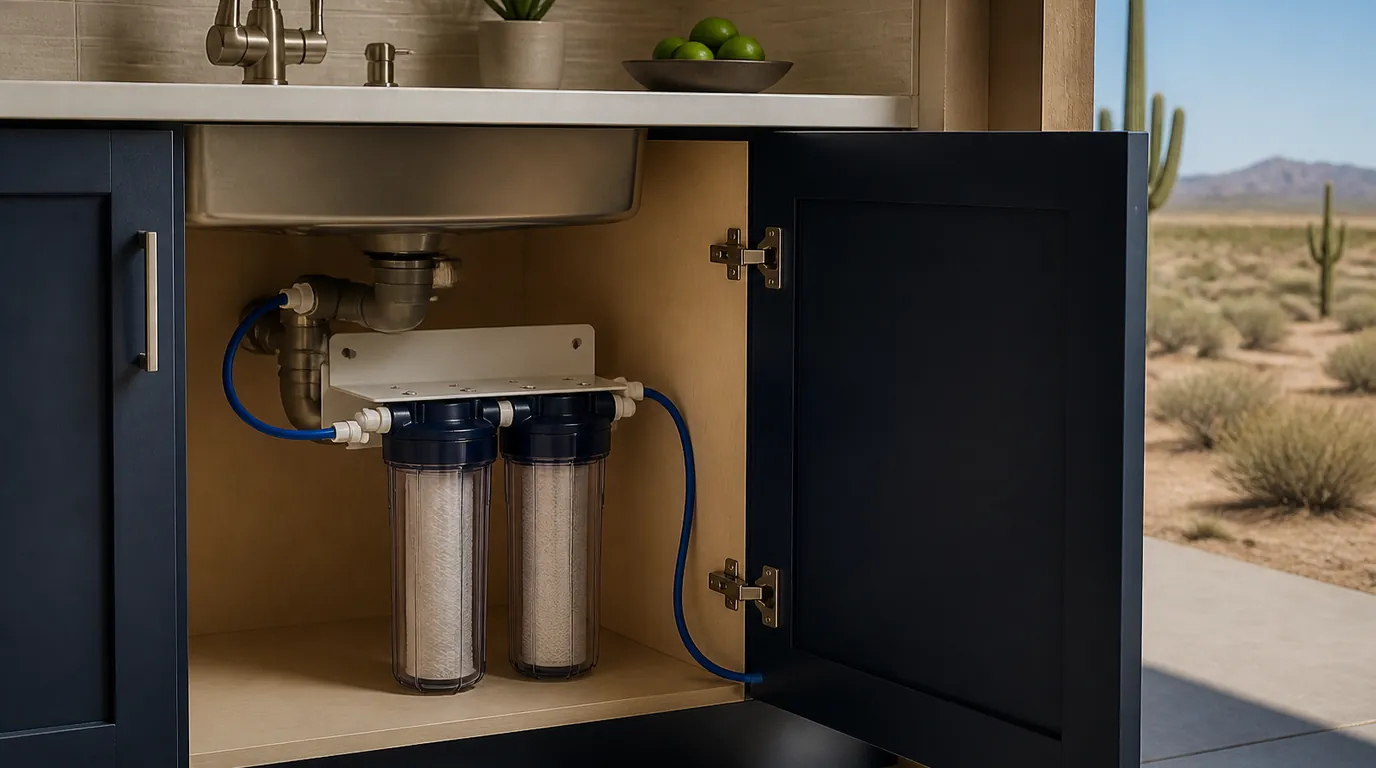
A whole-house filter treats all water as it enters. An under-sink system treats one tap, typically the kitchen. Each has different upkeep and cost.
Match the system to the problem. Tell the contractor what you notice and where.
Tempe adds chlorine and keeps a residual near 1 mg/L, which accounts for much of the taste people notice. The city publishes water quality results each year.
If your concern is a specific substance, check the report, or use a certified lab. The city's page refers customers to the state list of certified labs.
Cost depends on system type and upkeep.
Ask what replacement cartridges cost and how often they are needed.
The City of Tempe treats and tests its drinking water and publishes results, and chlorine is part of that treatment. Many people add a filter for taste.
Rentals can use under-sink or countertop options that leave the building plumbing untouched. Ask the owner before changing anything permanent.
Filters need cartridge changes. Ask how often and what each change costs. A neglected filter can restrict flow.
Install with a bypass and shutoff valves so service is easy.
An under-sink reverse osmosis unit treats drinking water at one tap. It needs a small faucet, a supply connection and a drain tie-in. Ask about the tank size, the filter schedule and whether wastewater goes to the drain.
Countertop and pitcher options need no plumbing and suit renters. Ask the owner before drilling a hole for a new faucet.
Sediment filters trap sand and rust particles. Carbon filters reduce chlorine taste and odor, and some organic compounds. Reverse osmosis systems push water through a membrane and remove many dissolved minerals, though they waste some water and need a drain connection.
A whole-house filter treats every tap, which helps with taste in the shower and protects appliances from sediment. An under-sink filter treats one faucet and is easier to install and replace. Choosing between them starts with what you want to remove.
The City of Tempe publishes an annual water quality report. Read it before you shop so you know what is in your water and what the city treats. A filter should match a real concern, such as taste, sediment from old pipe or a specific contaminant, and not a vague worry.
If you want to test the water at your tap, use a certified lab. A test costs far less than an unneeded system and shows whether a filter will help.
Every filter needs replacement cartridges on a schedule. A cartridge that is overdue loses effectiveness and can restrict flow or grow bacteria. Mark the date on the housing and set a reminder.
Ask the contractor which cartridges your system uses, where to buy them and how to change them. Systems with a bypass valve make service easy, since you can isolate the filter without shutting off the house.
Put in a softener or get a stalled one cycling and making soft water again.
Clear mineral scale from an on-demand heater, chase down fault codes, or install a new one.
Stop a faucet drip, bring back full flow, free a frozen shutoff or fix a leaking outdoor bib.
The city treats and tests it and publishes an annual report. Filters are about taste and preference, not a safety fix.
A softener addresses hardness. A filter removes particles, chlorine taste and odor.
Under-sink and countertop units often can. Get the owner's approval first.
It varies by system. Ask for the schedule and the cost.
The line is answered around the clock. Close the supply to the filter housing, then call. New installs are scheduled for the day.
Pricing depends on the system and the access. The dispatcher gives a clear quote before work begins.
Ask on the call. Many contractors will install one you supply.
It depends on what you want to improve. Under-sink units cover drinking water at one tap.
Figures and statements on this page that come from outside references are listed here.
Call the 24/7 line and describe it. A dispatcher lines up a local contractor.
Service area centered on Tempe and nearby Maricopa County cities.