Water Heater Installation & Replacement
Remove the dead tank and set a new heater matched to household size, fuel supply and available space.
Gas pipe feeds ranges, dryers, furnaces and barbecues. A gas odor is always urgent, while planned work like a new barbecue stub-out is careful, code-driven work. Smell gas? Take everyone outside and call 911 or the gas company from a safe distance.
Smelling gas means leaving first. Dial 911 or the gas utility once you are outdoors.
A sulfur or rotten-egg odor, hissing near a pipe, or a pilot that went out and stinks of gas are each reason to exit the home. Utilities treat odor reports as service calls.
Once the gas is off and the home is safe, call the plumbing line for repairs.
Common jobs include a line for a range or dryer, a grill hookup, a fireplace or a new water heater. The plumber sizes the pipe for the load.
Pressure testing checks that the new line holds before the gas is turned on.
Cost follows length, material and access.
Ask whether the permit and pressure test are in the quote.
Many Tempe homes use electric appliances, so adding gas for a grill or range means a new line. Ask about the cost of trenching and the meter capacity.
Valley summers make outdoor cooking popular. A gas grill line is a common request.
Most jurisdictions require a permit and inspection for gas work. Find out who applies for the permit and when the inspector is due.
Check the contractor's license on the Arizona Registrar of Contractors site before work.
Some signs call for leaving the house. Others call for a visit.
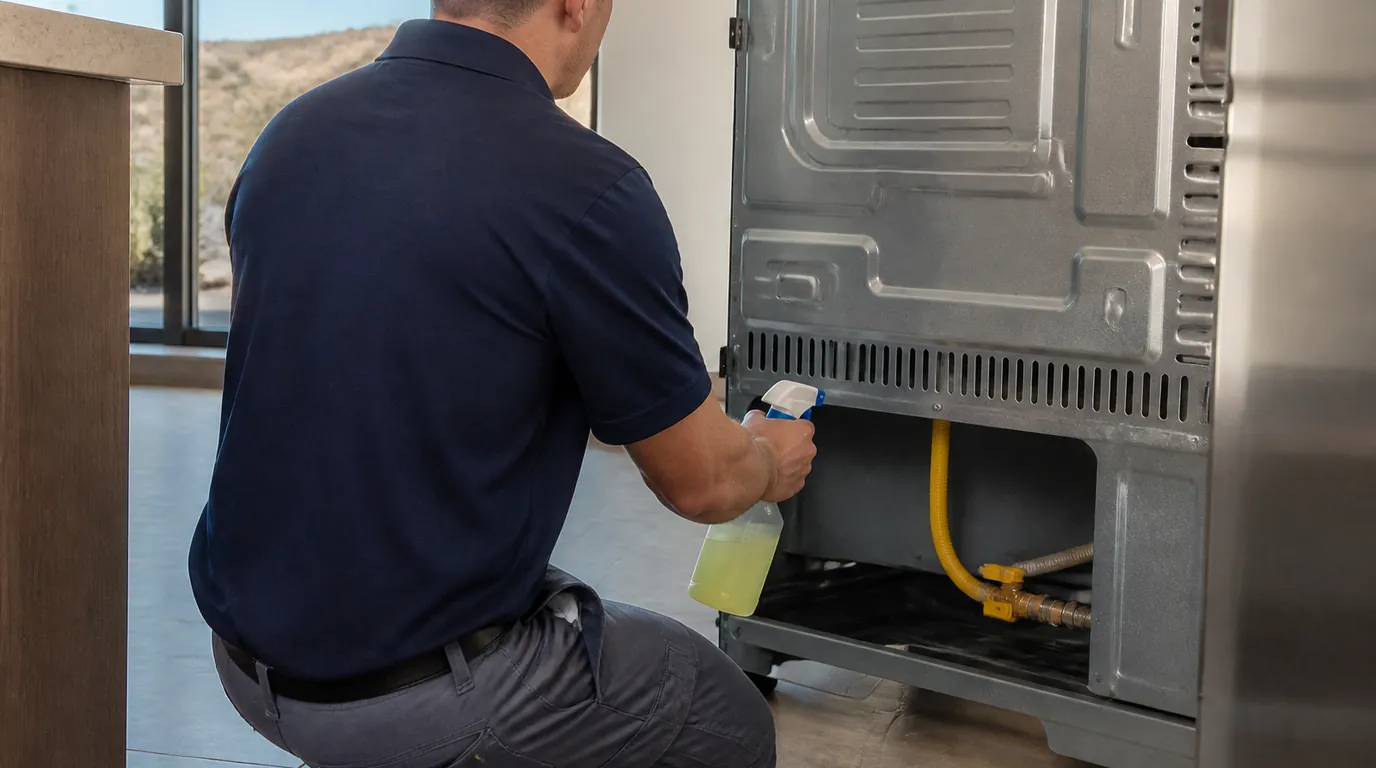
A plumber checks fittings with a leak solution or an electronic detector and repairs or replaces what is failing. Stoves, dryers, fireplaces and inserts each have their own connectors and shutoffs.
Moving from one gas type to another, such as propane to natural gas, requires different orifices and sometimes a regulator. Tell the dispatcher about the appliance and the fuel before the visit. Not every contractor handles conversions.
Gas appliances connect to rigid pipe through a shutoff valve and a flexible connector, and each part has a role. The valve lets you stop gas to the appliance without shutting off the house. The connector allows the appliance to move slightly. Old or kinked connectors should be replaced, and a plumber tests the joints for leaks after the work.
Remove the dead tank and set a new heater matched to household size, fuel supply and available space.
Install the pipe inside framing, then the fixtures, for a brand-new house or an addition.
Plumbing help for storefronts, offices, apartment buildings and retail centers.
Go outside, leave switches and flames alone, and call 911 or the gas utility from there.
Yes, these are routine. The contractor looks at the pipe route, the appliance load and the permit.
It is a standard step. It confirms the line holds before the gas is turned on.
Frequently. The contractor will say and usually files it.
If gas is the problem, get out, avoid switches and flames, and call 911 or the gas utility from outside. After the supply is made safe, the plumbing line can set up the repair.
Pricing depends on length, material and access. The dispatcher gives a clear quote before work begins.
Yes, with the right connector and shutoff, followed by a leak test.
Ask the dispatcher. Conversions vary by appliance and contractor.
Figures and statements on this page that come from outside references are listed here.
Call the 24/7 line and describe the project. If you smell gas, leave first.
Service area centered on Tempe and nearby Maricopa County cities.